
A Hidden Tokyo Island Walk: Tsukuda to Monja Street
Walk from historic Sumiyoshi Shrine and 1837 tsukudani in Tsukuda across to Tsukishima Monja Street, hot melon pan, an onsen, and griddle dining at Moheji.
A Quiet Tokyo Island Walk from Tsukuda to Monja Street
TL;DR: This walking route connects the quiet maritime history of Tsukuda with the griddled dining culture of Tsukishima. Along one continuous path, you can visit a shrine dating to 1646, sample traditional tsukudani preserved since 1837, cross a historic vermilion bridge, explore eighty monjayaki kitchens, and visit a neighborhood bathhouse.
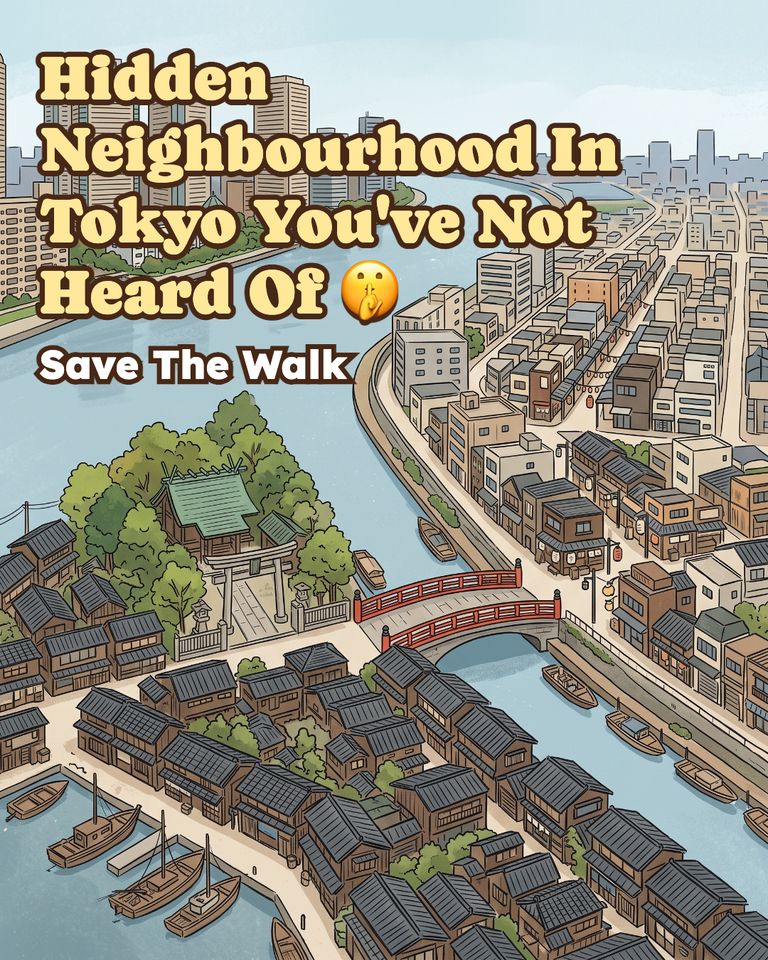
Tokyo holds historic pockets where maritime heritage and food traditions sit quietly beside modern residential blocks. Tsukuda and Tsukishima form an island neighborhood that many visitors bypass, yet the entire area can be experienced on a single continuous walk.
I put this route together to connect the older, waterfront roots of Tsukuda with the dining culture of Tsukishima. You begin at a shrine built by seventeenth-century fishermen, pass the shop where tsukudani originated, cross an old canal bridge, and finish along a street lined with dozens of lively griddles.
Sumiyoshi Shrine and the Fishermen of Old Edo
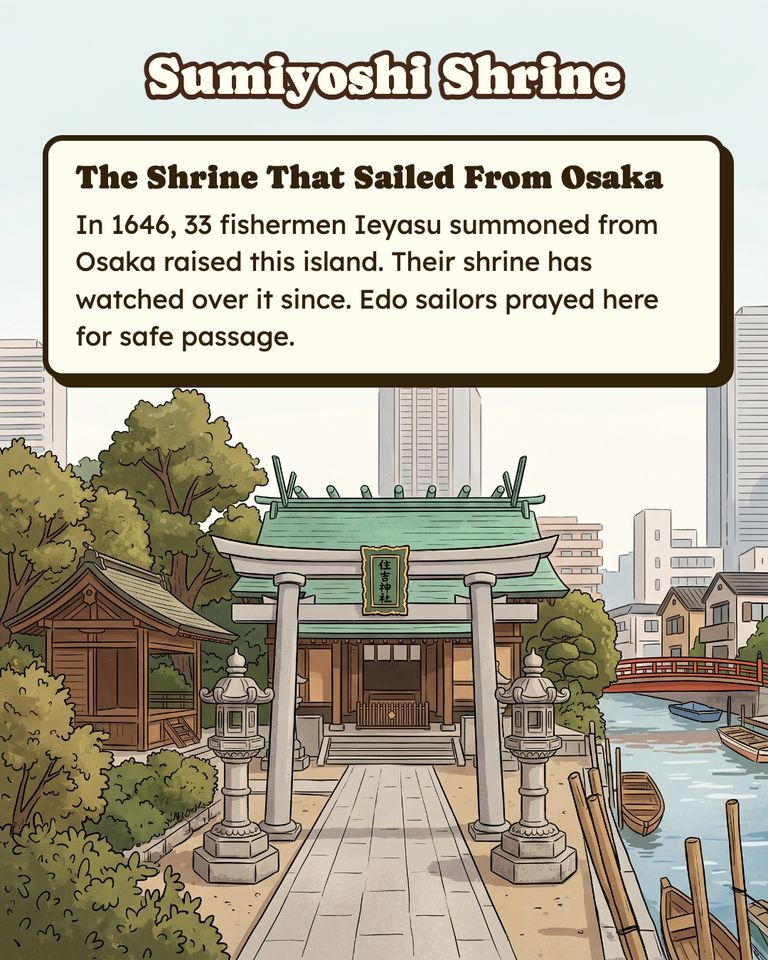
The walk begins at Sumiyoshi Shrine, known locally as Sumiyoshi Jinja. This site marks the very beginning of the island community. In 1646, thirty-three fishermen summoned by Tokugawa Ieyasu arrived from Osaka and raised this island out of the water.
When they settled here, they brought their spiritual traditions with them. Their shrine has watched over the island ever since its founding. During the Edo period, sailors came to these grounds to pray for safe passage before venturing out onto open water. Walking through the stone torii gate today, with traditional lanterns flanking the pathway and boats resting along the nearby water, you can still feel the connection to Tokyo's early coastal trades. Taking a quiet moment here before beginning your walk gives context to the streets that follow, showing how deeply water and seafaring shaped this community.
Tsukudani Ten'yasu and Preserved River Flavors
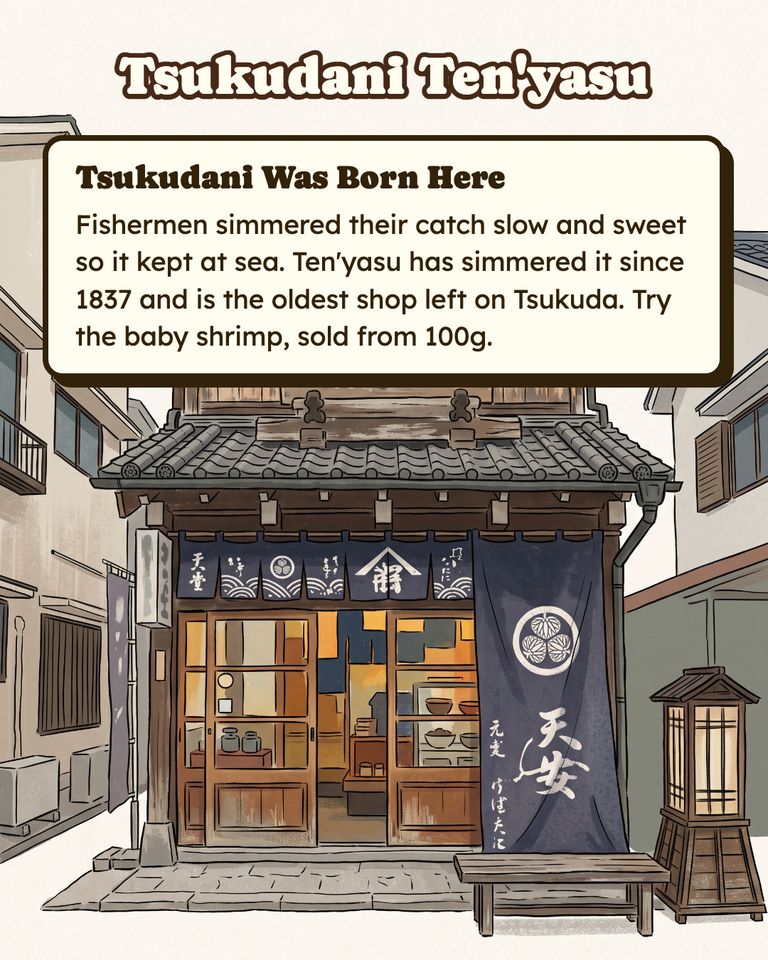
A short distance from the shrine grounds sits Tsukudani Ten'yasu, a shop that anchors the culinary history of the district. Tsukudani itself was born on this island. Local fishermen originally simmered their fresh catch slow and sweet using soy sauce and sugar so that the seafood would keep well during long days at sea.
Ten'yasu has been simmering its seafood continuously since 1837, making it the oldest shop left on Tsukuda. The exterior retains the look of old Edo, with dark wooden framing, traditional noren curtains hanging across the entrance, and a paper lantern resting out front. Inside, the preserved seafood is displayed in traditional ceramic bowls. I recommend trying the baby shrimp, which is sold by weight starting from 100 grams. It offers a direct taste of Edo food preservation methods that have remained unchanged across generations of shopkeepers.
Crossing Tsukudakobashi
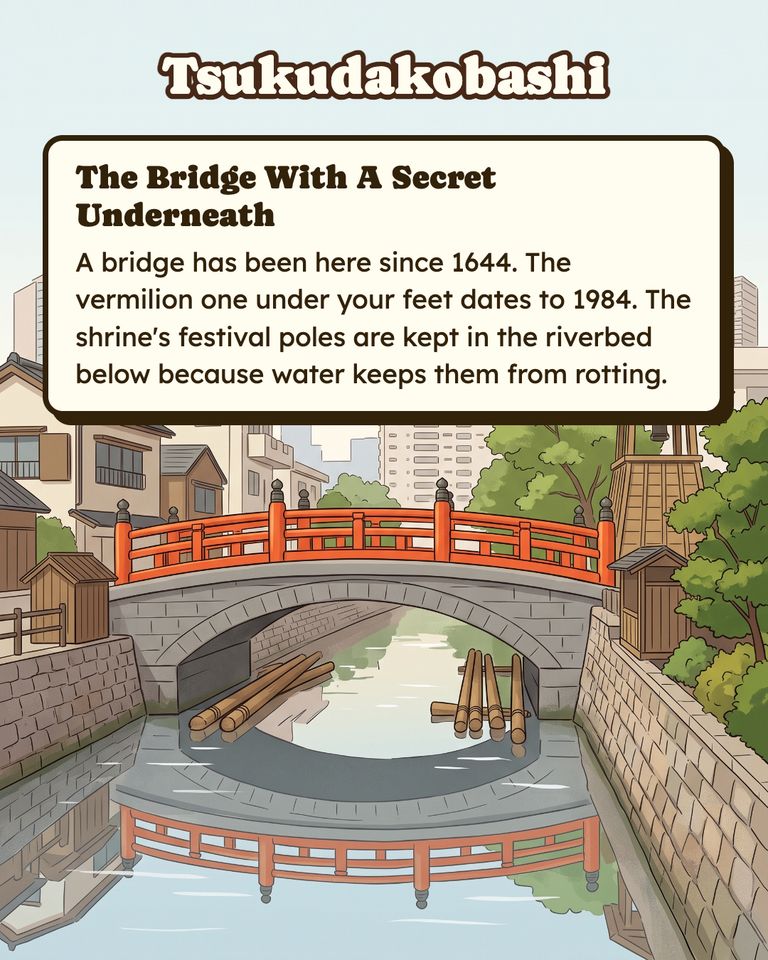
Leaving Ten'yasu behind, the route takes you across Tsukudakobashi, a bridge with a long history spanning the local waterway. A crossing has existed at this exact location since 1644, serving as a vital link for the early fishing community. The arched, vermilion structure beneath your feet today was built in 1984, retaining the historic presence of the original passage.
Tsukudakobashi carries an interesting secret beneath its stone arch. If you look down into the canal bed below, you can see large timber logs resting submerged in the water. These are the shrine's festival poles. They are deliberately kept in the riverbed between celebrations because submersion in water keeps the wood from drying out and rotting. It is an ingenious preservation method hidden in plain sight, maintaining tradition beneath the quiet current of the canal.
The Evolution of Tsukishima Monja Street
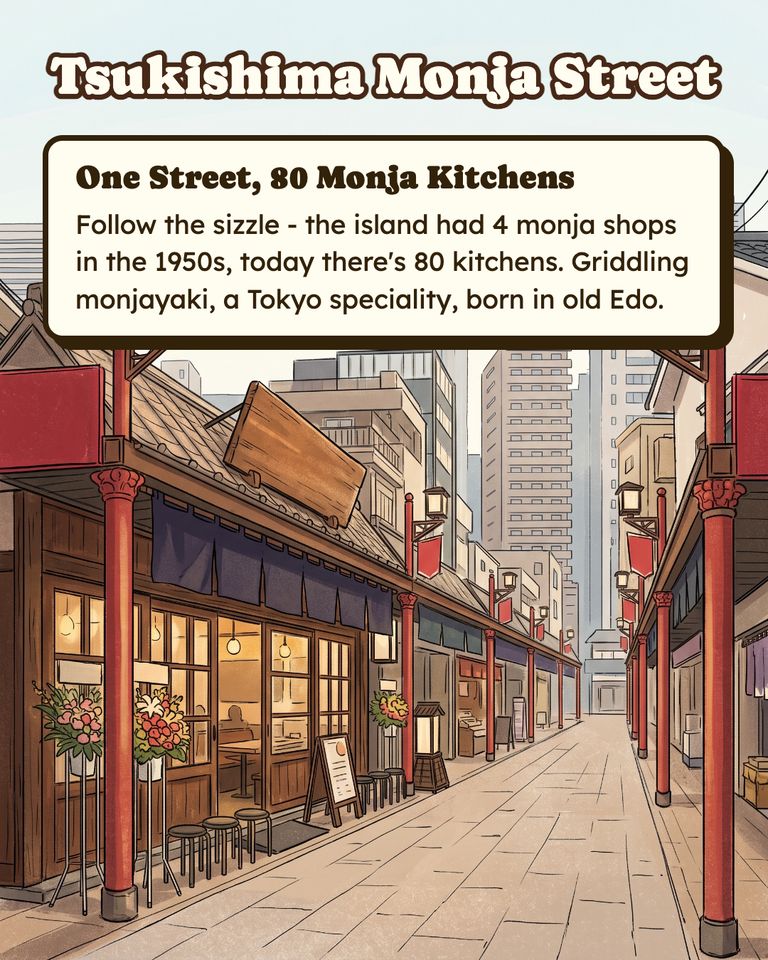
Crossing beyond the canal brings you into Tsukishima and onto Monja Street, the bustling heart of the island's food culture. Monjayaki is a distinctive Tokyo specialty with roots that go back to old Edo, characterized by a savory batter cooked directly on a flat iron griddle until it develops a crisp underside.
The concentration of restaurants here has expanded dramatically over the past few decades. In the 1950s, the island had only four monja shops. Today, there are eighty kitchens lining the street, creating a dense arcade filled with the aroma of simmering dashi, cabbage, and seafood. Walking down the covered sidewalks, you can follow the sizzle escaping from open doorways and choose between long-running dining rooms and modern griddle spots.
A Warm Pause at Kyuei Melon Pan
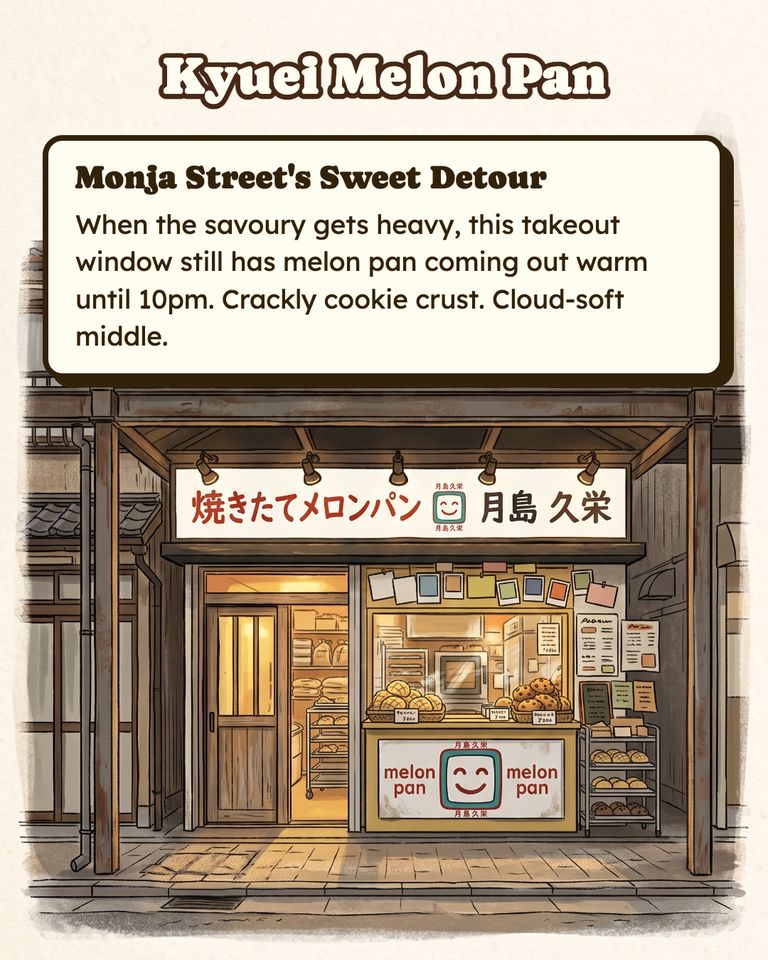
While monjayaki is the main draw along the street, a sweet stop provides a welcome break during your walk. Tsukishima Kyuei operates a small takeout window located directly on the main strip.
When the savory dishes feel heavy, this bakery window provides a warm alternative. Kyuei keeps fresh melon pan coming out warm from the ovens until 10:00 pm. The pastry features a crackly cookie crust on the exterior and a cloud-soft middle on the inside. Picking up a warm roll to eat as you stroll down the covered walkways is one of the simple pleasures of this route, especially during an evening walk when the street lanterns are lit.
Tsukishima Kannon and the Upper Floor Onsen
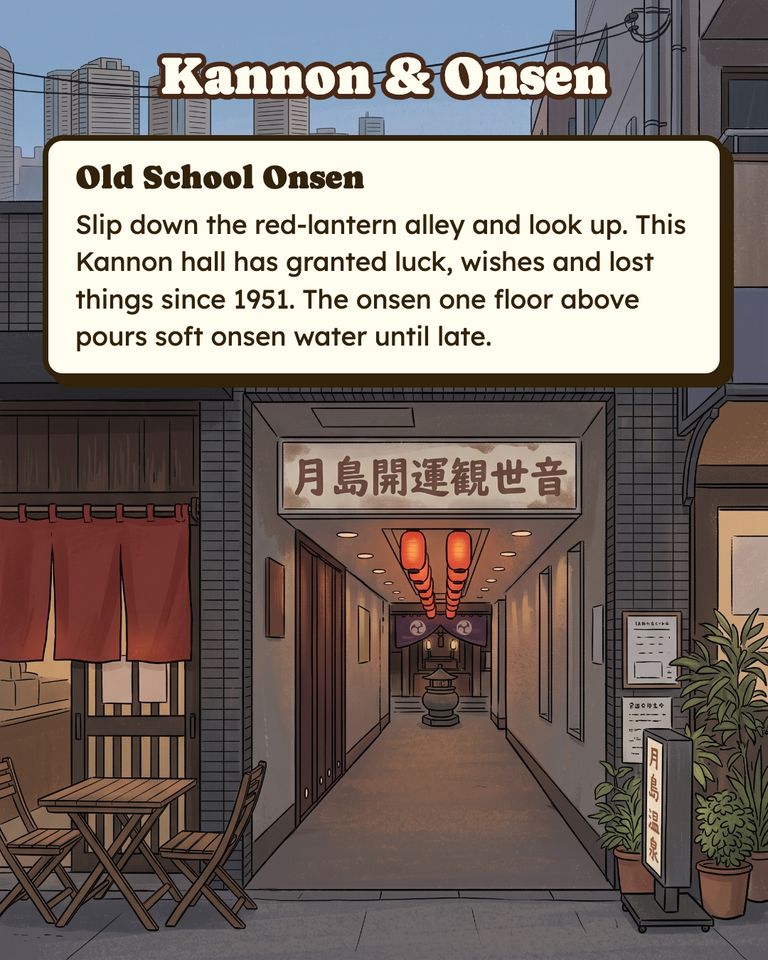
Continuing down the avenue, look for a small entrance framed by lanterns. Slipping down this red-lantern alley reveals two unexpected community spaces stacked directly on top of each other.
At the end of the corridor sits Tsukishima Kannon, officially known as Tsukishima Kaiun Kanzeon. This hall was established in 1951 and has served local residents ever since. Visitors come here to pray for luck, personal wishes, and the recovery of lost things. The sheltered atmosphere makes it a serene stop away from the busy street outside.
Directly one floor above the temple hall, you will find Tsukishima Onsen. This neighborhood bathhouse pours soft onsen water and stays open until late. Finding a functional hot spring bath directly above a sacred hall in a residential corner of Tokyo is rare, offering an authentic neighborhood experience for anyone who wants to soak after walking the neighborhood.
Griddle Dining at Moheji Flagship
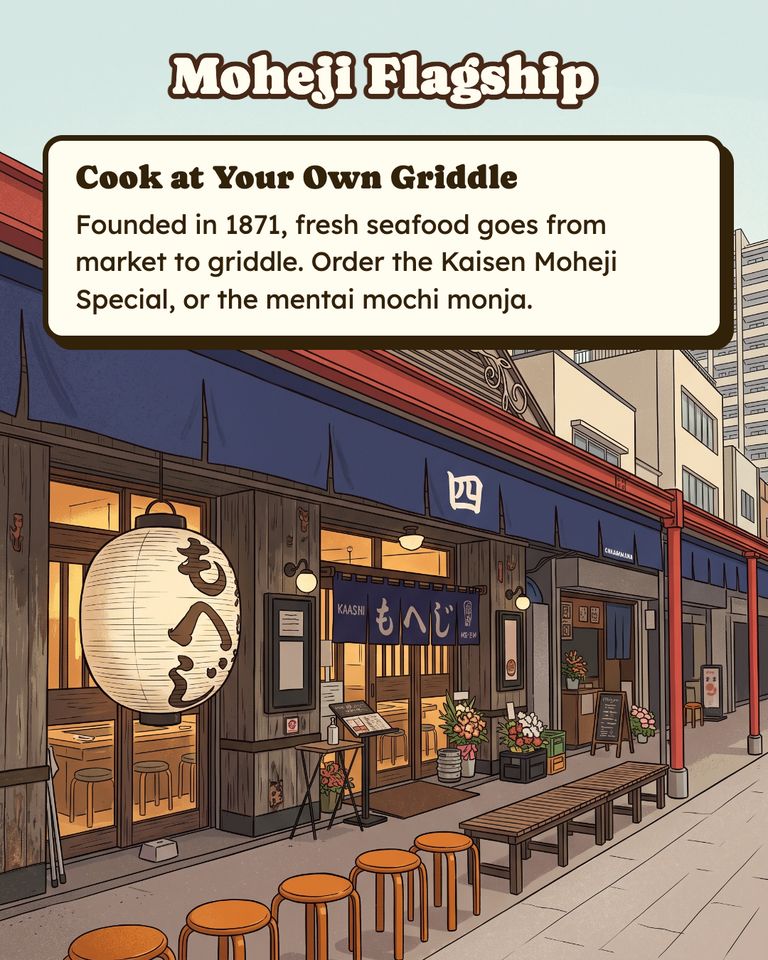
The final stop of the walking route is Moheji Flagship, where you can sit down for a full griddle meal. The company behind Moheji traces its founding back to 1871, bringing a long heritage of seafood sourcing to the table. Fresh seafood moves directly from the market to the kitchen griddle.
At Moheji, you cook at your own griddle built into the dining table. The menu offers a wide variety of toppings, but two orders stand out for first-time visitors. The first is the Kaisen Moheji Special, which highlights their market-sourced seafood. The second is the mentai mochi monja, a classic combination of spicy pollack roe, chewy rice cakes, and cabbage bound together by the savory batter. Cooking the mixture down until the edges crisp up against the hot steel plate makes for a satisfying finish to the island walk.
Practical Overview of the Eight Island Stops
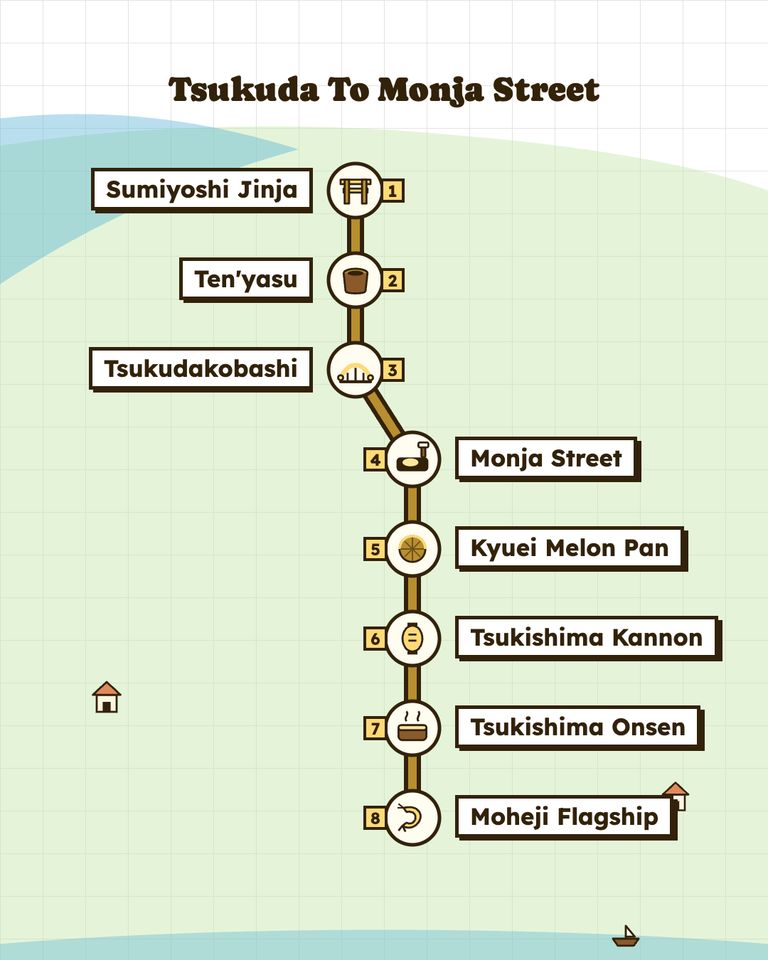
To make planning easy, here is the complete sequential order of the eight locations along the route:
- Sumiyoshi Jinja
- Tsukudani Ten'yasu
- Tsukudakobashi
- Tsukishima Monja Street
- Kyuei Melon Pan
- Tsukishima Kannon
- Tsukishima Onsen
- Moheji Flagship
The entire walk is compact and easy to navigate on foot, moving naturally from historical landmarks into dining spots. Because Kyuei serves warm melon pan until 10:00 pm, the onsen runs until late, and the monja kitchens stay open into the evening, this route works exceptionally well in the late afternoon and night. You can explore the historical shrines and canal bridges in the daylight, then spend your evening enjoying the bathhouse and dining along the griddles of Monja Street.