
A Local Guide to Monzen-Nakacho: Tokyo's Historic Hidden Suburb
Discover Monzen-nakacho just 12 minutes from Tokyo Station with this seven-stop walking guide covering historic temples, Showa alleys, and iconic local food.
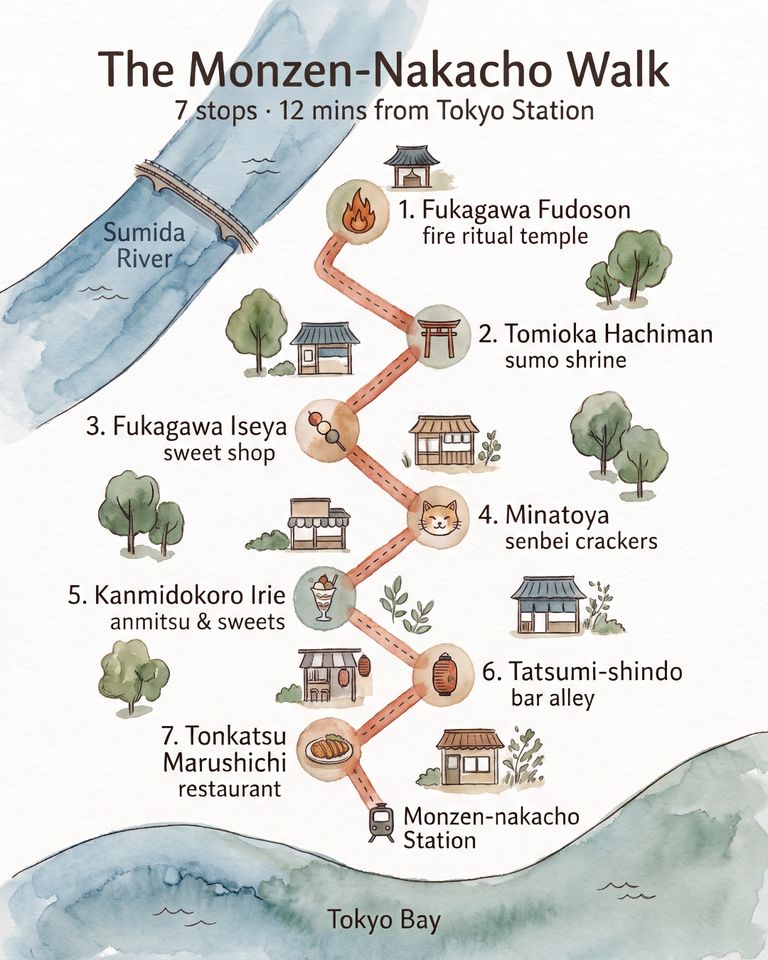
Seven Stops in Monzen-Nakacho: A Walking Route Through Historic Tokyo
TL;DR: Located just twelve minutes from Tokyo Station, Monzen-nakacho is a historic neighborhood that many international visitors miss. This seven-stop walking route brings together centuries of local heritage, from Edo-era temple rituals and sumo history to Showa streetscapes and standout food. Highlights include the fire ceremonies at Fukagawa Fudoson, traditional sweets at century-old confectioners, and the thickest katsu don in Japan.
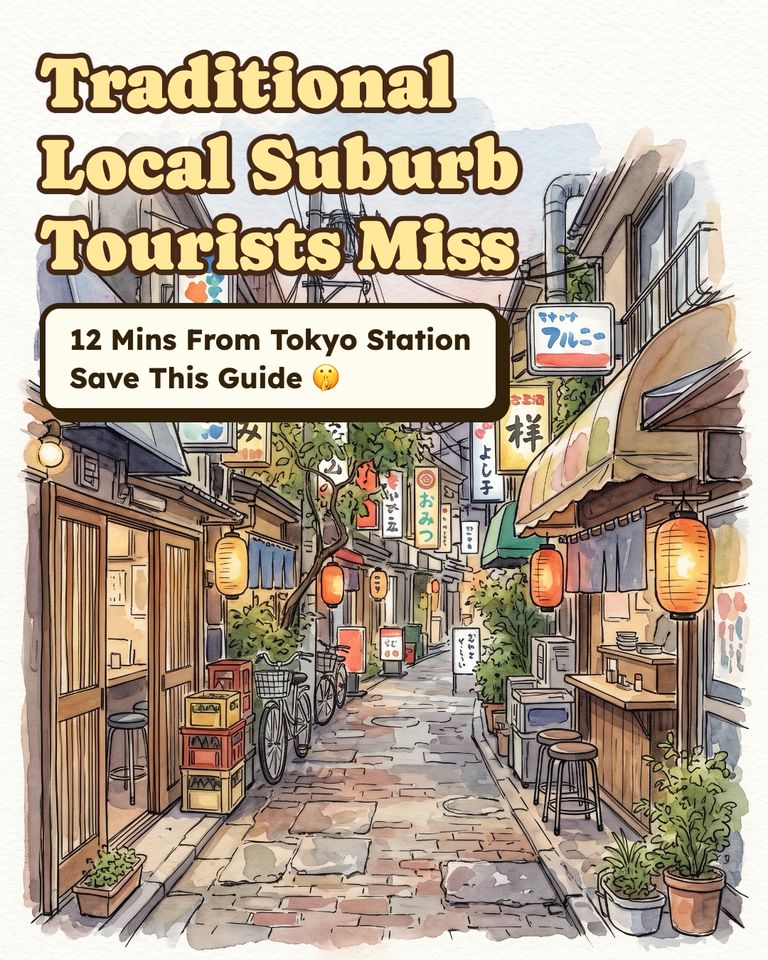
When planning a trip through Tokyo, it is easy to spend all your time moving between the major commercial districts. Yet just twelve minutes from Tokyo Station, situated between the Sumida River and Tokyo Bay, sits Monzen-nakacho. This suburb retains the character of old Edo alongside preserved post-war Showa architecture. While big crowds gather at more prominent sights across the capital, Monzen-nakacho offers a slower, deeply historic atmosphere where neighborhood traditions continue uninterrupted.
I mapped out a seven-stop walking course through the district that connects its most significant cultural landmarks and long-running culinary establishments. Whether you want to witness powerful Buddhist rituals, explore classic sweet shops, or enjoy a drink in a fifty-meter alleyway, this walk reveals a side of the city that tourists rarely get to experience.
Spiritual Roots and Edo History
Fukagawa Fudoson
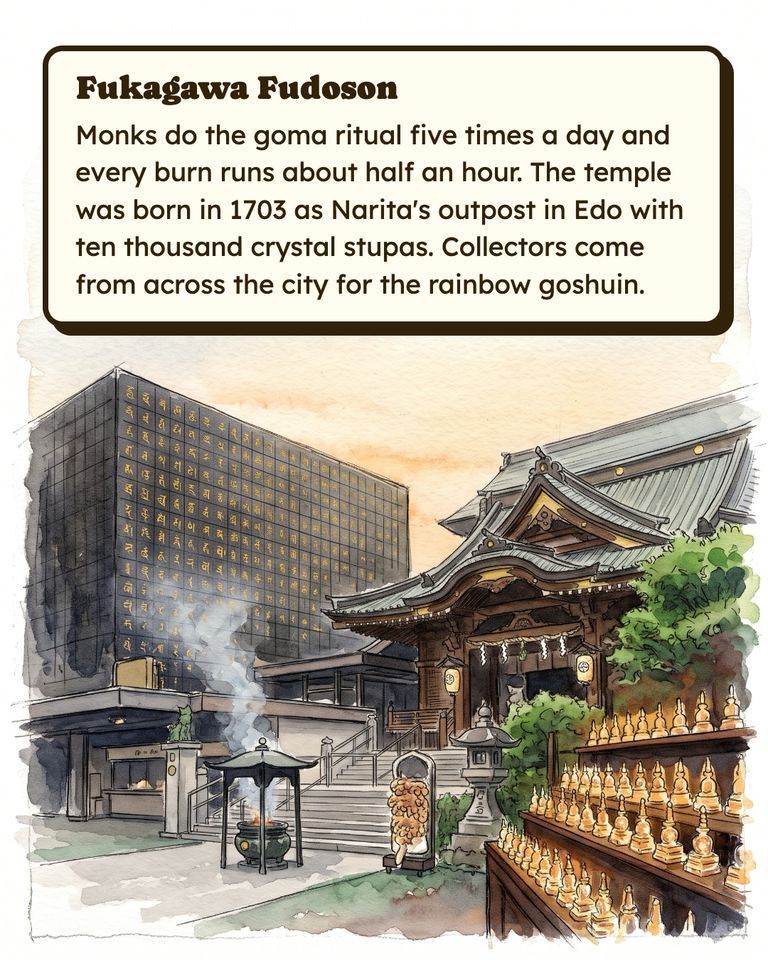
Our walk begins at Fukagawa Fudoson, a temple established in 1703 as an outpost of Narita in Edo. The temple grounds present a striking visual contrast, where historic wooden architecture stands alongside a modern hall covered in sacred Sanskrit script. Inside, the temple houses ten thousand crystal stupas that create a memorable spiritual atmosphere.
One of the central reasons to visit Fukagawa Fudoson is the goma fire ritual. Monks perform this sacred purification ceremony five times every single day. Each ritual burn lasts about half an hour, filling the temple hall with the resonance of rhythmic taiko drumming, chanting, and leaping flames. Watching the fire rise as monks offer prayers is a profound experience that anyone can observe respectfully. If you enjoy collecting temple stamps, Fukagawa Fudoson is also famous for its rainbow goshuin. Dedicated collectors travel from across the city specifically to receive this vibrant calligraphy in their stamp books.
Tomioka Hachiman
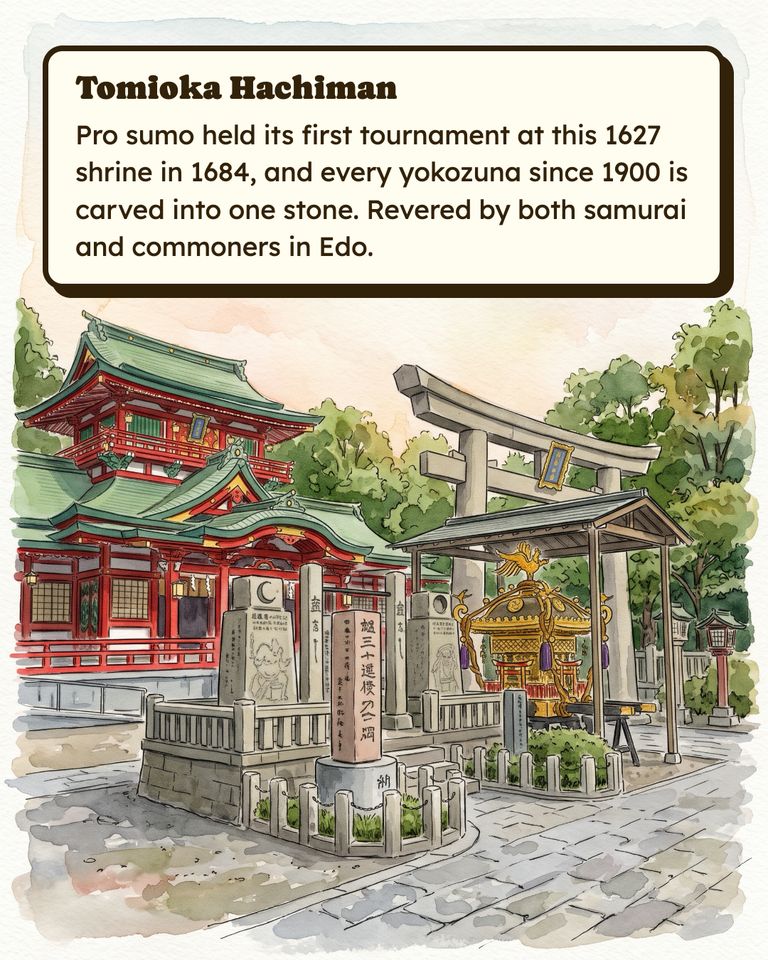
A short walk from Fukagawa Fudoson brings you to Tomioka Hachiman, a grand Shinto shrine founded in 1627. During the Edo period, this shrine held an esteemed position in civic life and was revered equally by samurai and commoners.
Tomioka Hachiman also occupies a foundational place in the history of Japanese sports. Professional sumo held its very first tournament on these shrine grounds in 1684. That historic connection remains honored today through several prominent stone monuments standing on the property. In particular, one significant stone carries the carved names of every yokozuna, or grand champion, since 1900. Taking time to walk among these monuments offers direct insight into the spiritual origins of sumo wrestling and its deep roots within the local community.
Traditional Sweets and Century-Old Snacks
Fukagawa Iseya
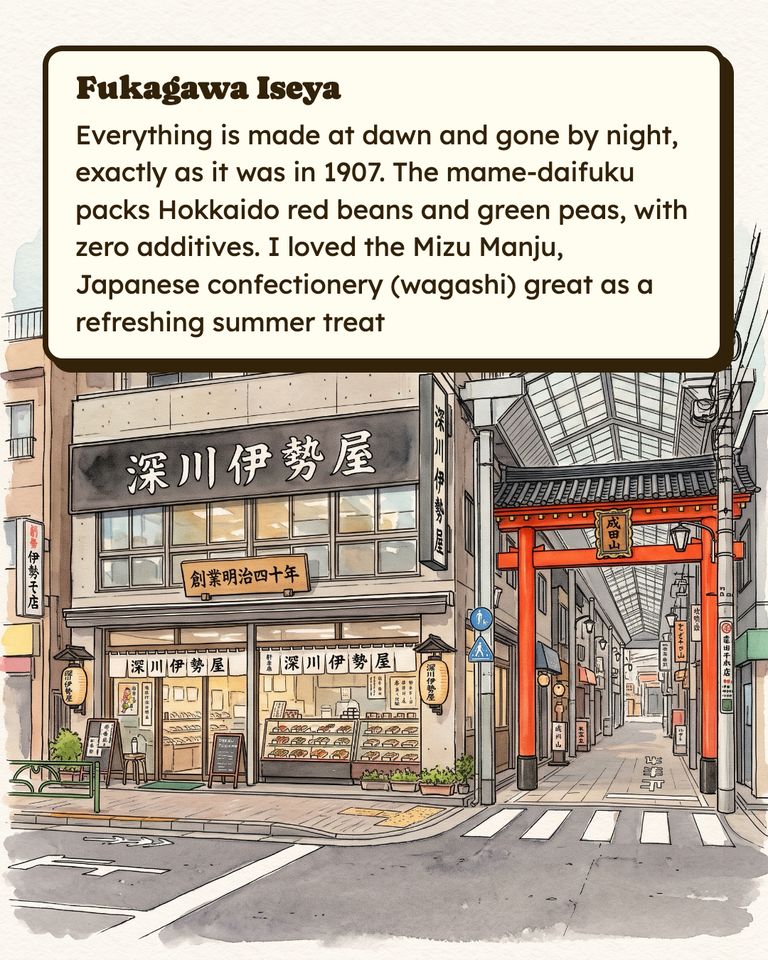
Just outside the temple approaches, Fukagawa Iseya has been serving traditional Japanese confectionery since 1907. The shop operates under an enduring philosophy where everything is made fresh at dawn and sold out by night, maintaining the exact standard of freshness established over a century ago.
Their signature item is mame-daifuku, a soft mochi rice cake packed with Hokkaido red beans and savory green peas, prepared with zero additives. The balance of subtle sweetness from the red bean filling and the slight saltiness of the peas creates a classic texture and flavor profile. If you visit during the warmer months, I recommend trying their mizu manju. This translucent wagashi confection has a cooling, jelly-like exterior that makes it an exceptionally refreshing summer treat while exploring the neighborhood.
Minatoya
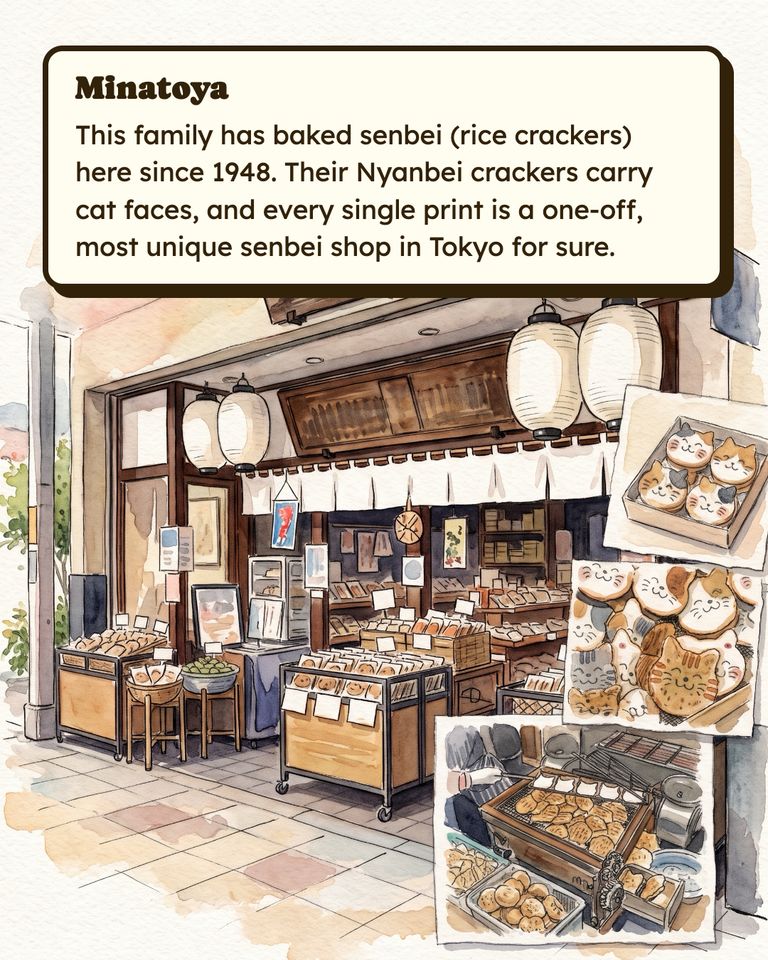
A brief stroll further down the street leads to Minatoya, a family-owned rice cracker shop that has been baking senbei on this site since 1948. The storefront maintains a charming, open-air design with wooden display carts rolled out to greet passersby.
Minatoya is best known for its Nyanbei crackers, which are shaped and decorated as cat faces. Because each cracker is individually prepared and hand-detailed, every single print is a one-off piece. This attention to detail easily makes Minatoya the most unique senbei shop in Tokyo. Trays of freshly grilled crackers sit alongside packaged gift boxes, offering an ideal souvenir or an easy snack to enjoy while walking along the street.
Kanmidokoro Irie
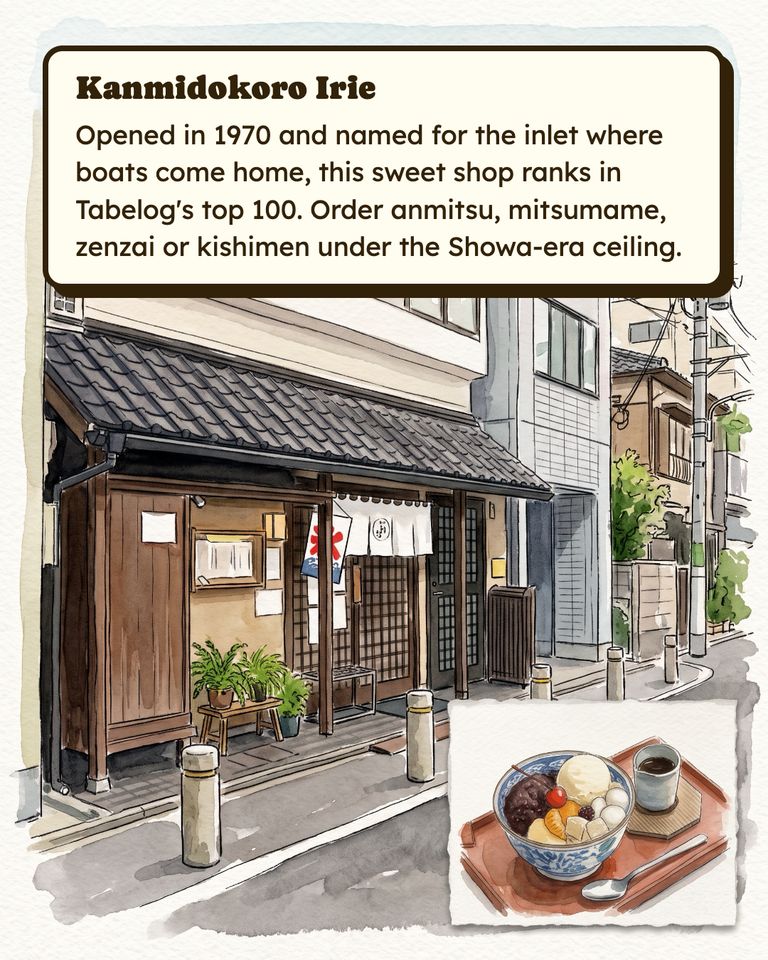
For a restful sit-down break, head to Kanmidokoro Irie. Opened in 1970, this beloved sweet shop takes its name from the inlet where boats come home, reflecting the water-bound geography of the district near the Sumida River and Tokyo Bay. Over the decades, the shop has earned substantial acclaim, securing a ranking in Tabelog's top 100 dessert establishments.
The interior retains a classic Showa-era ceiling that sets a quiet, nostalgic mood. Kanmidokoro Irie is celebrated for traditional dishes such as anmitsu, which features agar jelly cubes served with sweet azuki bean paste, fruit, and syrup. The menu also offers mitsumame, warm bowls of zenzai sweet red bean soup, and savory bowls of kishimen flat noodles. Ordering anmitsu here gives you a genuine taste of Tokyo's traditional dessert parlor culture, served carefully on wooden trays with hot tea.
Evening Atmosphere and Legendary Portions
Tatsumi-shindo
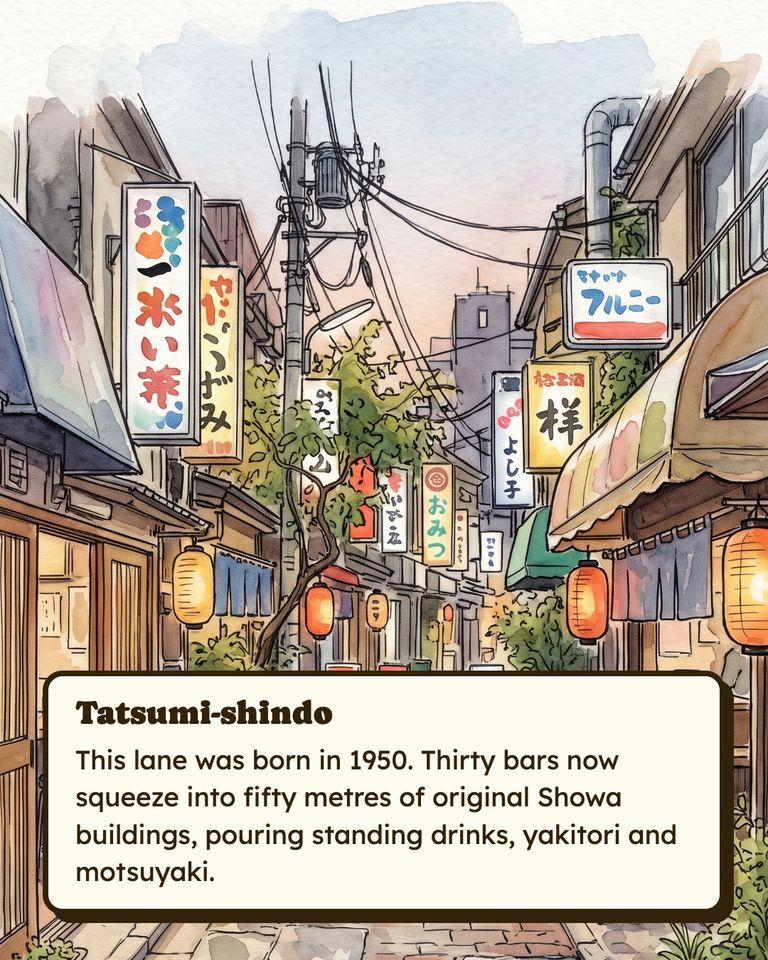
As late afternoon turns into evening, the character of Monzen-nakacho shifts toward its classic drinking culture. Tatsumi-shindo is an atmospheric alleyway born in 1950 during the early post-war period. Along a stretch measuring just fifty meters, thirty tiny bars are packed tightly into original Showa-era wooden buildings.
Walking down Tatsumi-shindo feels like stepping back decades in time. Glowing lanterns illuminate the narrow pathway, and patrons gather inside cozy spaces for standing drinks, freshly grilled yakitori chicken skewers, and motsuyaki pork offal. The alley preserves an intimate, community-centered nightlife that has largely disappeared from Tokyo's redeveloped commercial areas. It provides a welcoming glimpse into how locals gather to unwind after the workday.
Tonkatsu Marushichi
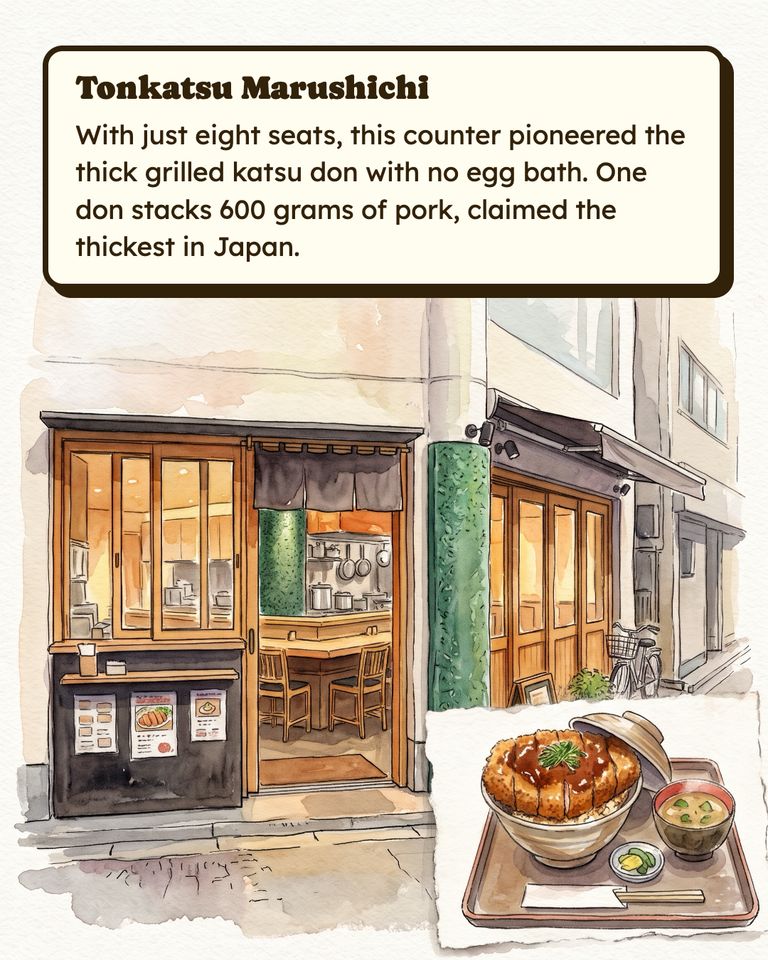
To conclude your walk with a substantial meal, visit Tonkatsu Marushichi. This tiny restaurant features a counter with just eight seats, so dining here is an intimate affair centered directly around the kitchen.
Tonkatsu Marushichi pioneered the thick grilled katsu don served without an egg bath, diverging from the conventional style where the fried cutlet is simmered in egg and broth. Instead, the pork cutlet is prepared extraordinarily thick, placed atop seasoned rice, and finished with sauce. One don stacks an astounding 600 grams of pork, earning the claim of being the thickest katsu don in Japan. Served with a bowl of miso soup and pickled vegetables, this massive bowl has become legendary among meat lovers and food enthusiasts across the country.
Planning Your Walking Route
Monzen-nakacho is remarkably accessible, located only twelve minutes from Tokyo Station. Its position close to the Sumida River and Tokyo Bay makes it easy to integrate into a broader Tokyo itinerary while offering an environment that feels removed from high-density tourist traffic.
You can complete the entire seven-stop circuit comfortably on foot in half a day. A practical way to plan your time is to arrive in the early afternoon to visit Fukagawa Fudoson and witness one of the half-hour goma fire rituals. From there, you can explore the grounds of Tomioka Hachiman and pick up freshly baked snacks at Fukagawa Iseya and Minatoya. After resting over anmitsu or kishimen at Kanmidokoro Irie, you can finish your evening by securing a seat at Tonkatsu Marushichi or enjoying a drink under the lanterns of Tatsumi-shindo. Monzen-nakacho proves that some of Tokyo's most memorable neighborhoods remain right beside the city center, waiting to be explored on foot.