
10 Japanese Yokai and Where to Find Their Legends Across Japan
Explore the fascinating folklore of regional Japan, from Hokkaido's butterbur-dwelling little people to Okinawa's banyan tree spirits.
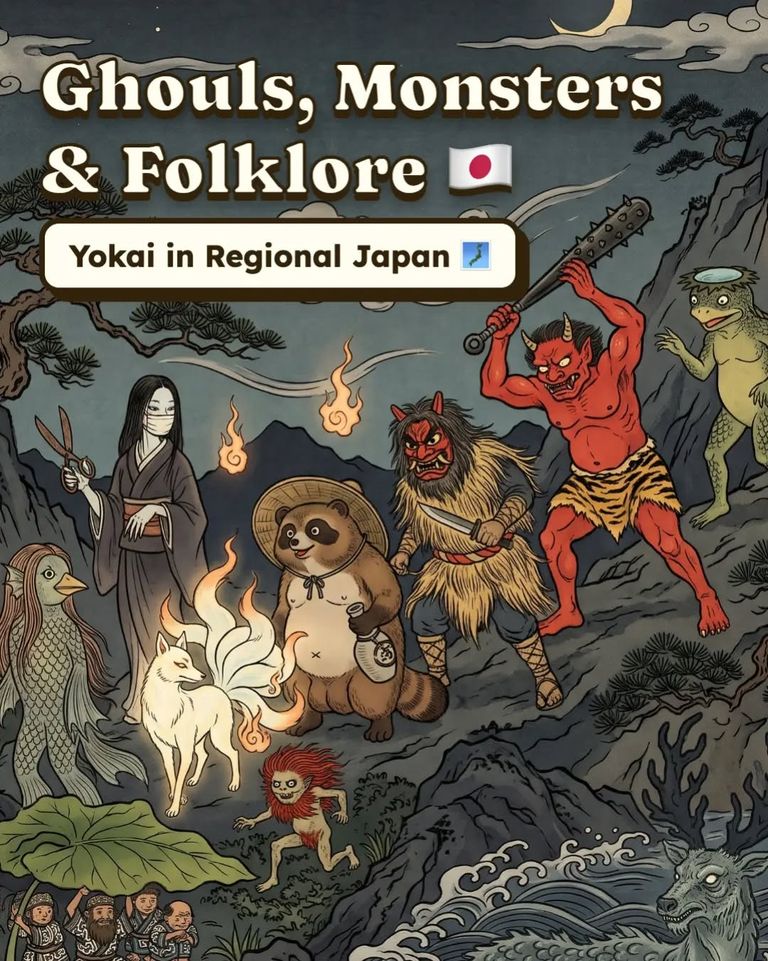
A Guide to Regional Japanese Yokai: Ghouls, Monsters, and Local Legends
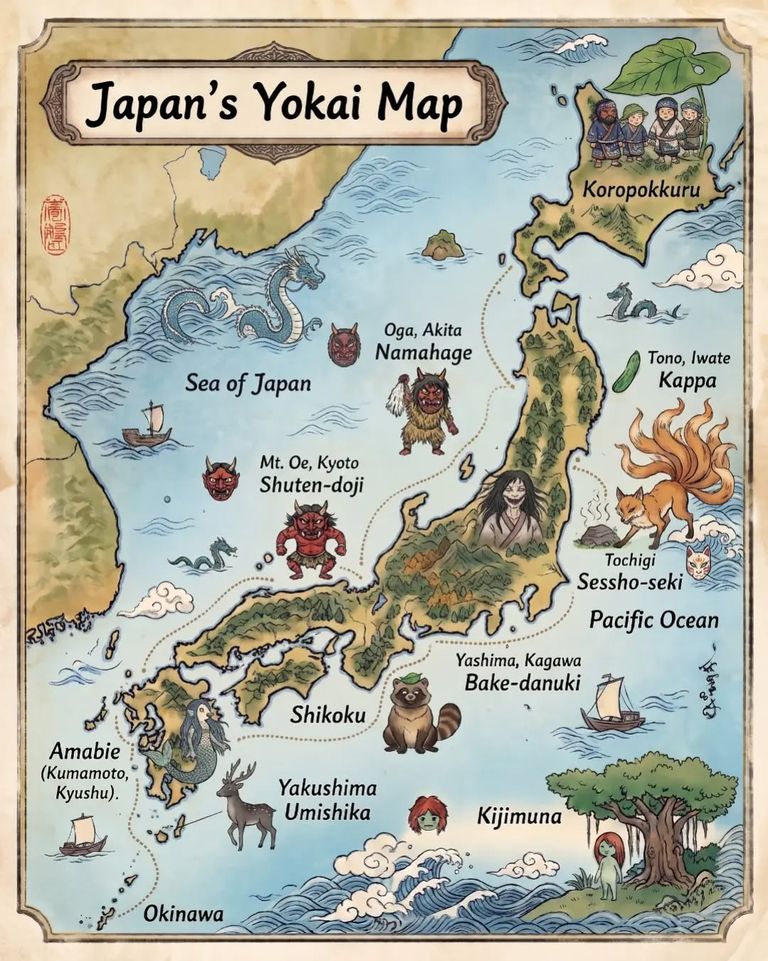
TL;DR: Japan's folklore stretches far beyond well-known ghost stories, with distinct spirits tied directly to specific landscapes and communities. From the tiny Koropokkuru under Hokkaido's giant leaves to the sea deer lurking off Yakushima, regional yokai shape local culture. Exploring these ten folklore locations offers a unique way to plan an itinerary across Japan.
When planning travel across Japan, looking into local folklore often reveals aspects of regional identity that standard guidebooks miss. Yokai, the legendary monsters, spirits, and supernatural beings of Japanese folklore, are deeply tied to the natural geography and heritage of the places they come from. Mountains, rivers, ancient trees, and rough coastal waters all carry stories meant to explain unusual phenomena, preserve community customs, or ward off misfortune.
Traveling with these legends in mind gives you a deeper connection to regional destinations. Here is a guide to ten fascinating yokai from across Japan, highlighting where their stories live and how these supernatural figures connect to local culture.
1. Koropokkuru: The Little People of Hokkaido
Location: Hokkaido
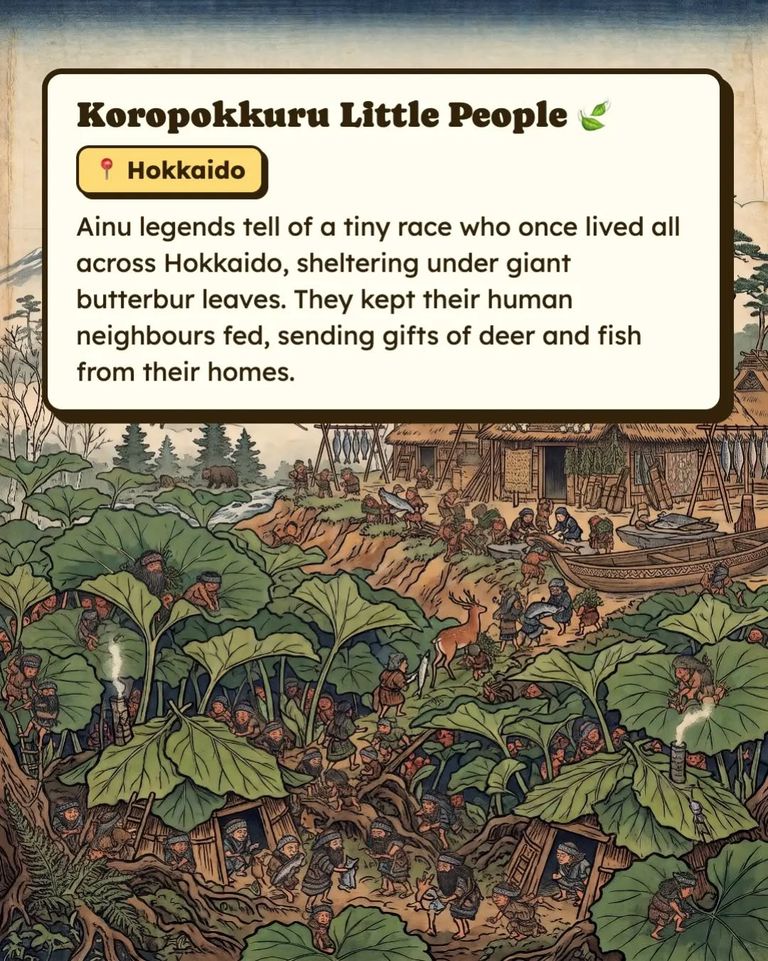
Up in the northern expanse of Hokkaido, ancient Ainu legends tell of the Koropokkuru, a tiny race of beings who once lived across the island. According to local lore, these miniature people were small enough to take shelter beneath the massive butterbur leaves that grow wild in Hokkaido's fertile soil.
The Koropokkuru were known as peaceful, generous neighbors to the human communities around them. Stories describe how they kept their human neighbors fed by quietly sending gifts of fish and deer from their homes. For travelers exploring Hokkaido, keeping an eye out for the island's native giant butterbur leaves provides a direct link to this gentle legend, reminding us of the long relationship between northern communities and the land.
2. Namahage: The New Year Ogre of Akita
Location: Oga, Akita Prefecture
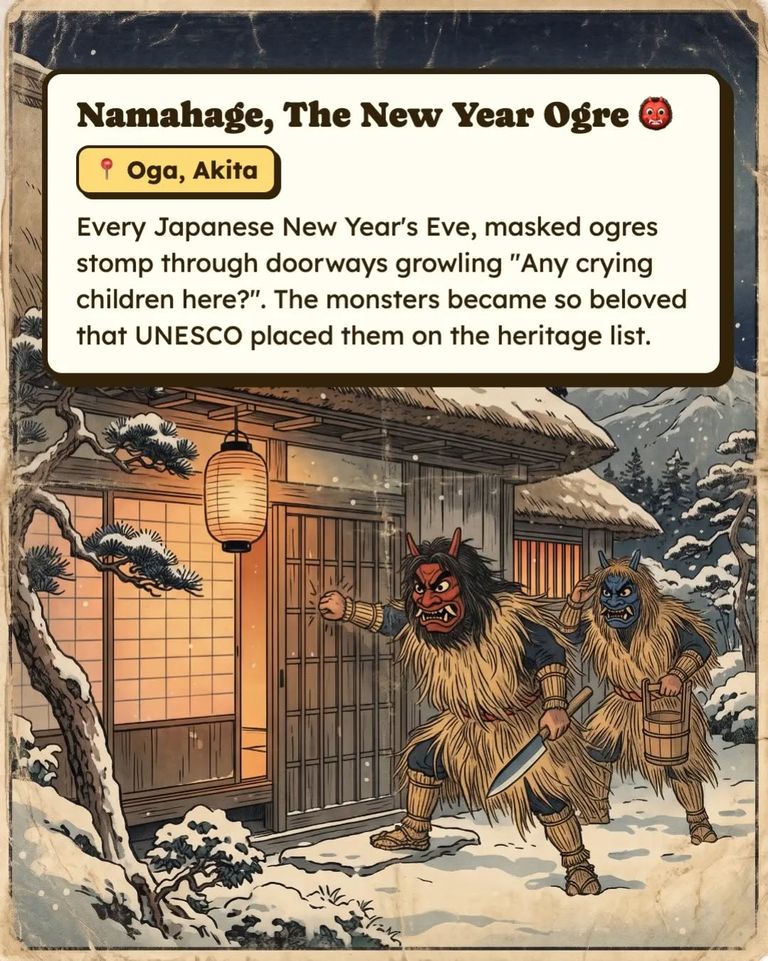
On the rugged Oga Peninsula in northern Akita, the winter season brings one of Japan's most famous traditions. Every Japanese New Year's Eve, figures dressed as fierce, horned ogres wearing heavy straw coats stomp straight through the doorways of local homes. Growling out the phrase, "Any crying children here?", these masked monsters make their presence known in a ritual designed to ward off laziness and bad behavior.
While terrifying to youngsters in the moment, the Namahage are cherished by the community as protective entities that bring blessings for the year ahead. In fact, these fearsome ogres became so beloved and culturally significant that UNESCO placed the tradition on its intangible cultural heritage list. Visiting Oga offers an incredible look at how monster folklore remains an active, living part of modern rural life.
3. Kappa: The Water Imp of Tono
Location: Tono, Iwate Prefecture
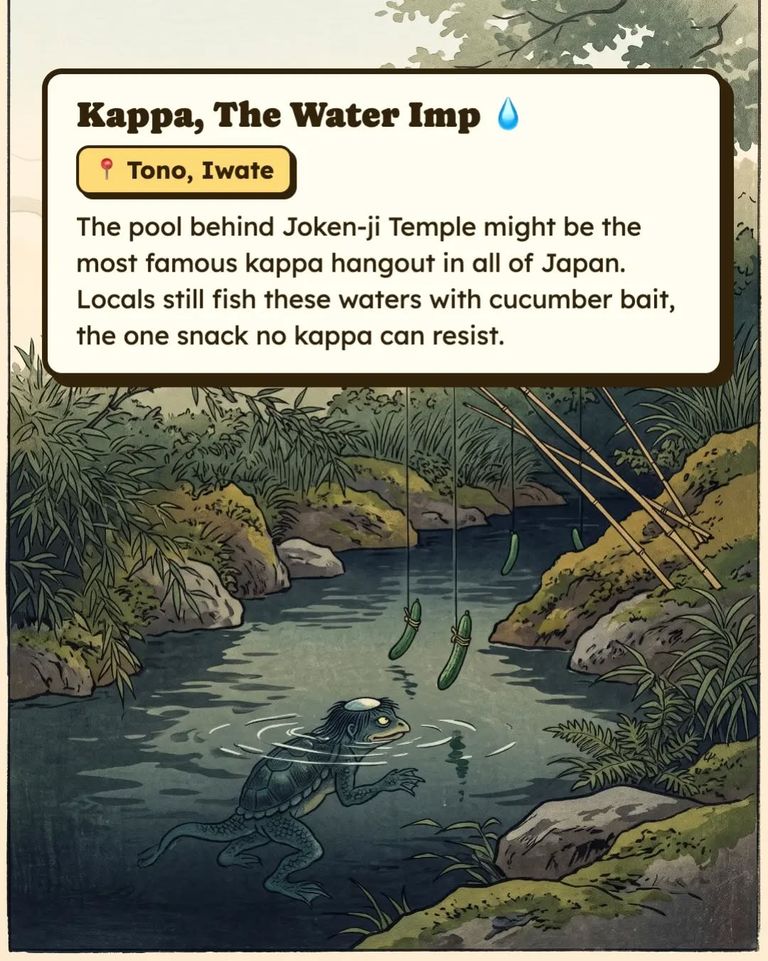
Tono, nestled in the interior of Iwate Prefecture, is known throughout Japan as a legendary center of folklore. Among its supernatural inhabitants, the kappa is the most famous. These water imps are amphibious creatures with beaks, turtle shells on their backs, and water-holding dishes on their heads.
The pool behind Joken-ji Temple in Tono might be the most famous kappa hangout in all of Japan. Flowing beside the temple grounds, this tranquil stream still carries the memory of the creature. To this day, locals fish these waters using cucumber bait on bamboo poles, relying on the one snack that no kappa can resist. When you visit Joken-ji Temple, seeing the fishing lines along the water brings the myth into the real world.
4. Tamamo no Mae: The Nine-Tailed Fox of Nasu
Location: Nasu, Tochigi Prefecture
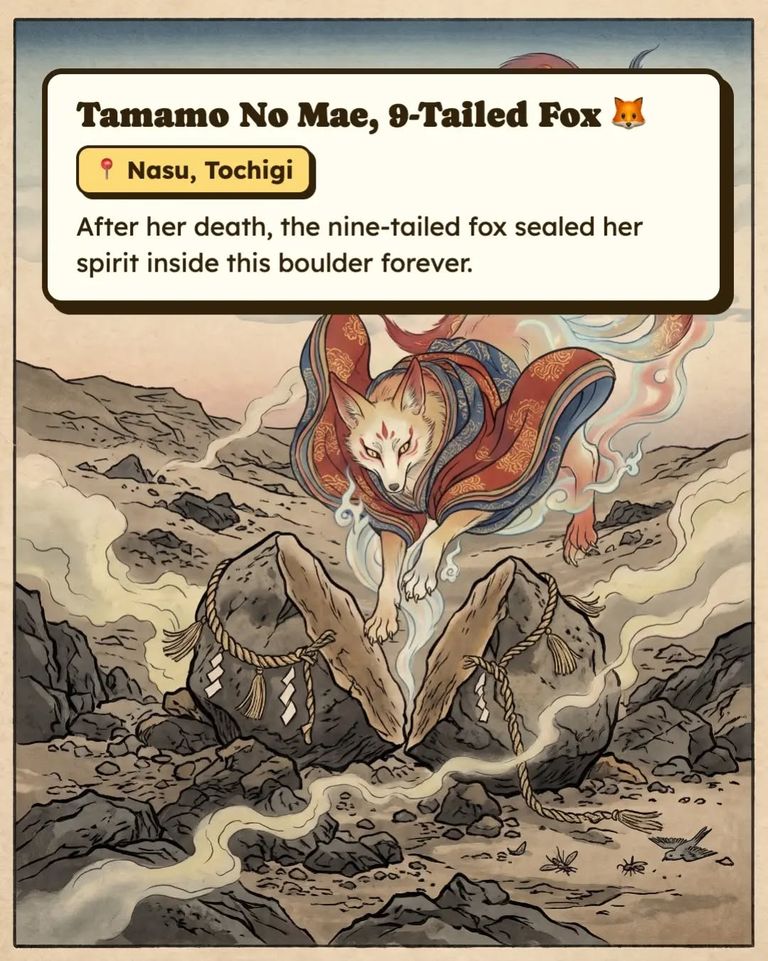
The volcanic highlands of Nasu in Tochigi Prefecture are home to the dramatic legend of Tamamo no Mae, a powerful nine-tailed fox spirit. In folklore, this mythical fox took the form of a beautiful woman before her true nature was exposed and she met her demise in the rocky, sulfurous plains of the region.
According to local belief, after her death, the nine-tailed fox sealed her spirit inside a large boulder forever. Known as the Sessho-seki, or Killing Stone, this cracked boulder sits surrounded by sacred ropes in a desolate, volcanic landscape where poisonous gases seep from the earth. Travelers visiting the Nasu area can walk out to the stone, where the atmosphere and the surrounding rocky landscape make the supernatural tale feel entirely plausible.
5. Kuchisake Onna: The Slit-Mouthed Woman of Gifu
Location: Gifu Prefecture
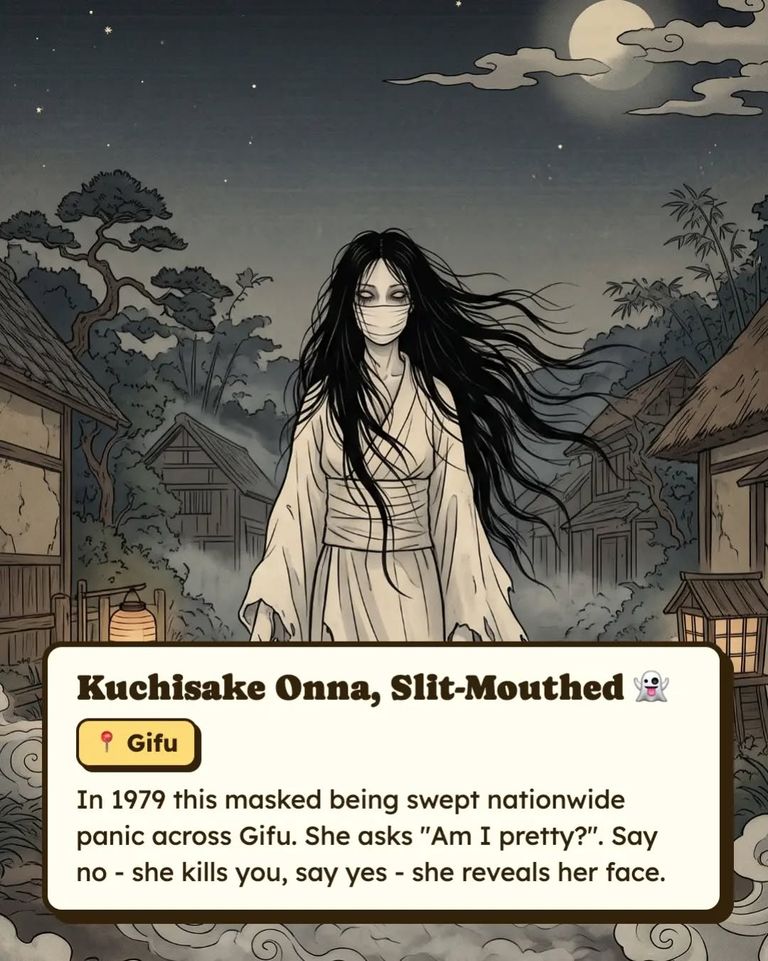
Not all yokai stories date back to antiquity; some evolved as modern urban legends that gripped entire prefectures. Kuchisake Onna, the slit-mouthed woman, is one of the most prominent modern monsters in Japanese lore. In 1979, reports of this masked being swept nationwide panic across Gifu Prefecture, prompting children to walk home in groups.
The legend describes an encounter with a woman wearing a surgical mask who approaches lone travelers to ask, "Am I pretty?". If you say no, she kills you with a pair of large shears. If you answer yes, she removes her mask to reveal a mouth slit from ear to ear before giving you a similar wound. Her story originated right in Gifu and remains a cautionary tale passed down through generations.
6. Shuten Doji: The Oni King of Mt. Oe
Location: Mt. Oe, Kyoto Prefecture
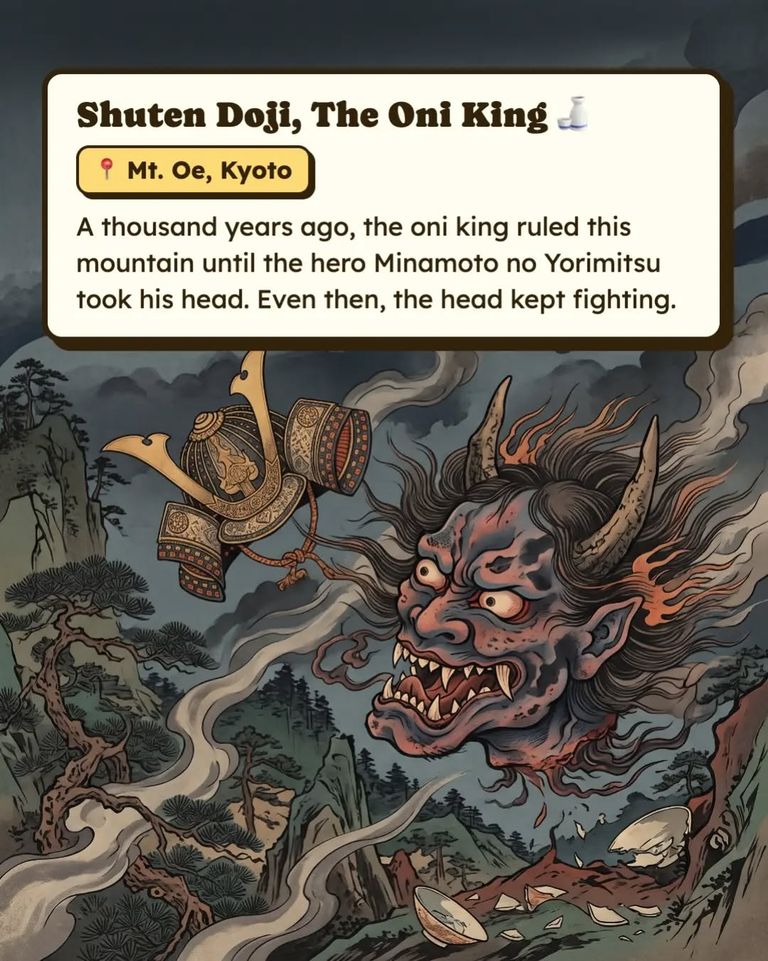
Far from the peaceful Zen gardens of Kyoto's city center lies Mt. Oe, a mountain with a dark and legendary past. A thousand years ago, an oni king named Shuten Doji ruled this mountain, leading a band of demons that terrorized the ancient capital and its surrounding passes.
The reign of terror lasted until the celebrated warrior and folk hero Minamoto no Yorimitsu climbed Mt. Oe to confront the beast, eventually taking Shuten Doji's head. However, the oni's fury was so intense that even after being severed, the head kept fighting, snapping through the air at the hero's helmet. Exploring the wooded slopes of Mt. Oe today connects you to this epic chapter of ancient Kyoto lore.
7. Bake Danuki: The Trickster of Yashima
Location: Yashima, Kagawa Prefecture
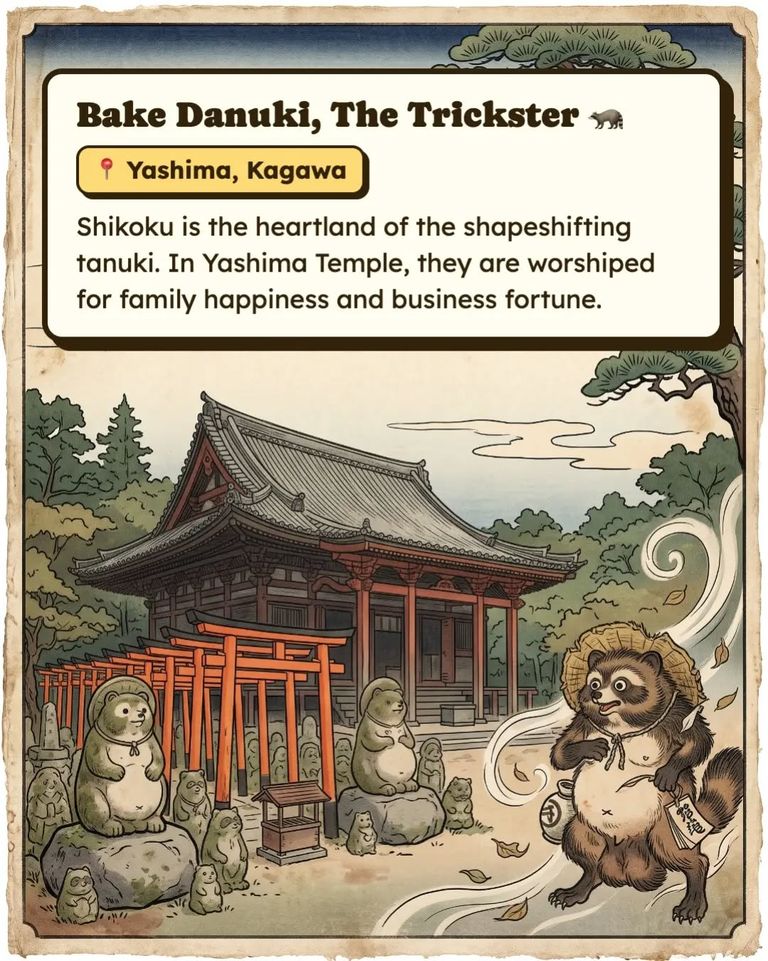
The island of Shikoku is widely recognized as the heartland of the shapeshifting tanuki, or raccoon dog. Unlike mischievous spirits that bring only harm, the Bake Danuki of Yashima in Kagawa Prefecture holds a place of genuine honor in the community.
At Yashima Temple, located on a dramatic flat-topped plateau overlooking the sea, tanuki are actually worshiped rather than feared. Large stone statues of these rotund, straw-hat-wearing tricksters stand proudly beside vermilion torii gates. Visitors and worshippers come to the temple specifically to pray to them for family happiness and business fortune, showing how folklore and sacred traditions blend together in regional Japan.
8. Amabie: The Sea Prophet of Kumamoto
Location: Kumamoto, Kyushu
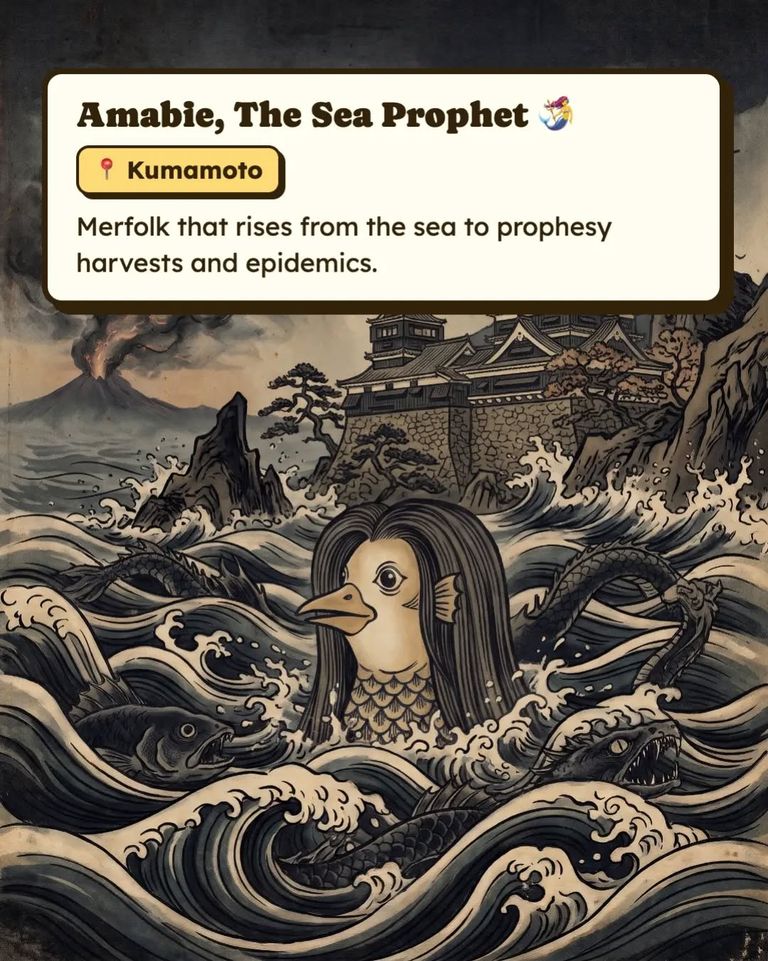
Rising from the coastal waters of Kumamoto in Kyushu, Amabie is a unique aquatic yokai with a bird-like beak, three fin-like legs, scales, and long hair. Rather than acting as a menace, Amabie is regarded as a benevolent sea prophet.
According to historical records, this rare merfolk rises from the sea to deliver prophecies regarding upcoming agricultural harvests and impending epidemics. Local lore holds that drawing or sharing the image of Amabie provides protection during difficult times. Today, travelers visiting Kumamoto's coastal areas can appreciate the comforting role this sea creature has played in local maritime culture for centuries.
9. Umishika: The Sea Deer of Yakushima
Location: Yakushima
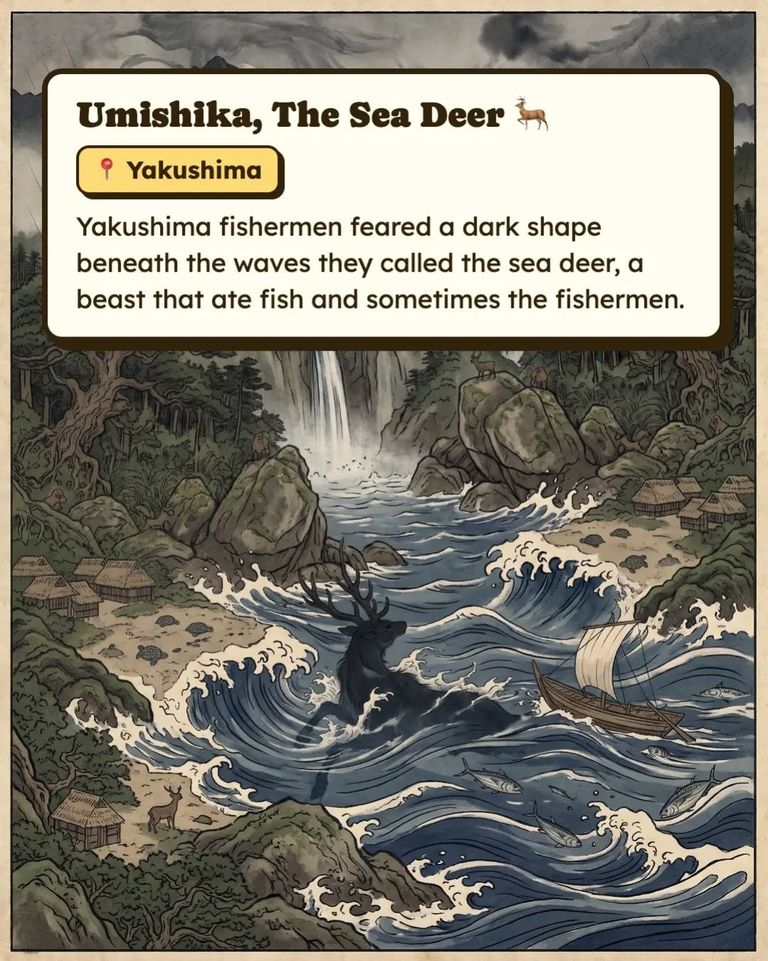
The island of Yakushima, situated south of mainland Kyushu, is world-renowned for its ancient cedar forests, cascading waterfalls, and native deer. However, the waters surrounding this mountainous island harbor a darker, more elusive myth known to the local fishermen.
Yakushima fishermen historically feared a dark shape beneath the ocean waves that they called the sea deer, or Umishika. This aquatic beast was said to have the head and antlers of a deer but inhabited the deep coastal currents. According to fishermen's tales, it was a dangerous predator that ate schools of fish and sometimes attacked and ate the fishermen themselves. For anyone looking out at Yakushima's wild coastal surf, the legend adds an eerie layer to the island's natural power.
10. Kijimuna: The Tree Spirit of Okinawa
Location: Okinawa
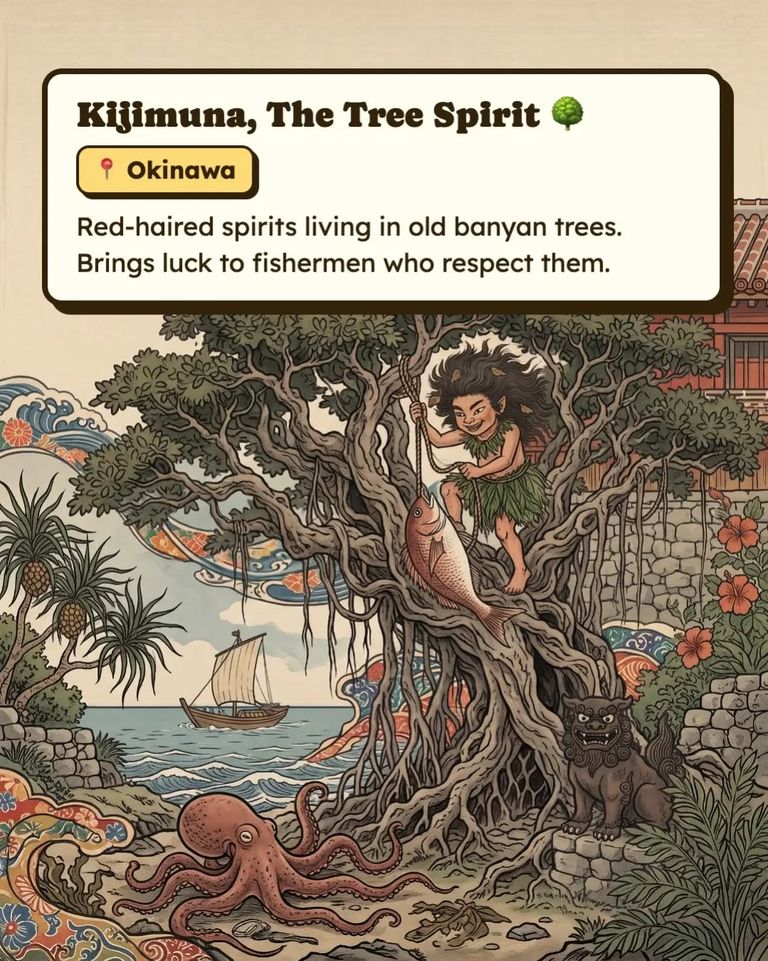
At the southern tip of the Japanese archipelago, Okinawa boasts a distinct cultural heritage with its own supernatural beings. The most famous of these is the Kijimuna, a playful spirit identifiable by its bright red hair and child-like appearance.
Kijimuna make their homes within the sprawling root systems and branches of old banyan trees across the islands. They share an intimate relationship with coastal life, known to bring exceptional luck to fishermen who show them respect and treat their sacred trees with care. When you walk past ancient banyan trees in Okinawa, remembering the Kijimuna helps you understand the deep reverence islanders hold for their native flora and coastal waters.
Planning a Folklore-Inspired Journey
Mapping out a trip around local legends brings you off the beaten path and into towns with rich regional pride. Whether you find yourself admiring stone tanuki at Yashima Temple, inspecting the sulfurous cracked rock in Nasu, or peering into the water at Joken-ji Temple in Tono, these monsters and spirits give historic depth to Japan's most scenic landscapes. Next time you head beyond the major cities, take time to learn the yokai stories that belong to the region you are exploring.