
Central Hokkaido Travel Guide: Route from Asahidake to Sapporo
A complete travel guide for Central Hokkaido, connecting Mount Asahi, Biei, Furano, Otaru, and Sapporo with scenic highlights and local specialties.
Planning a Central Hokkaido Route from Mountain Heights to Port and City Lights
TL;DR: This central Hokkaido route connects the volcanic trails of Mount Asahi with the rolling landscapes of Biei and Furano before heading west to the port of Otaru and ending in Sapporo. Along the way, travelers can experience alpine nature, famous agricultural produce, historic canal architecture, and distinctive regional dishes. Planning the journey by car allows you to cover these highlights smoothly in a single connected trip.
A road trip through central Hokkaido brings together some of the most varied scenery in northern Japan. The landscape shifts noticeably within relatively short driving distances, starting in the high alpine terrain of the Daisetsuzan range, descending through fertile agricultural basins, and concluding along the coast and in Hokkaido's bustling capital. If you are planning an itinerary across the central part of the island, following this path from the heights of Mount Asahi down to Sapporo gives you a balanced mix of outdoor exploration, rural farmland, regional craft culture, and hearty local meals.
Mount Asahi and the Alpine Highs of Asahidake
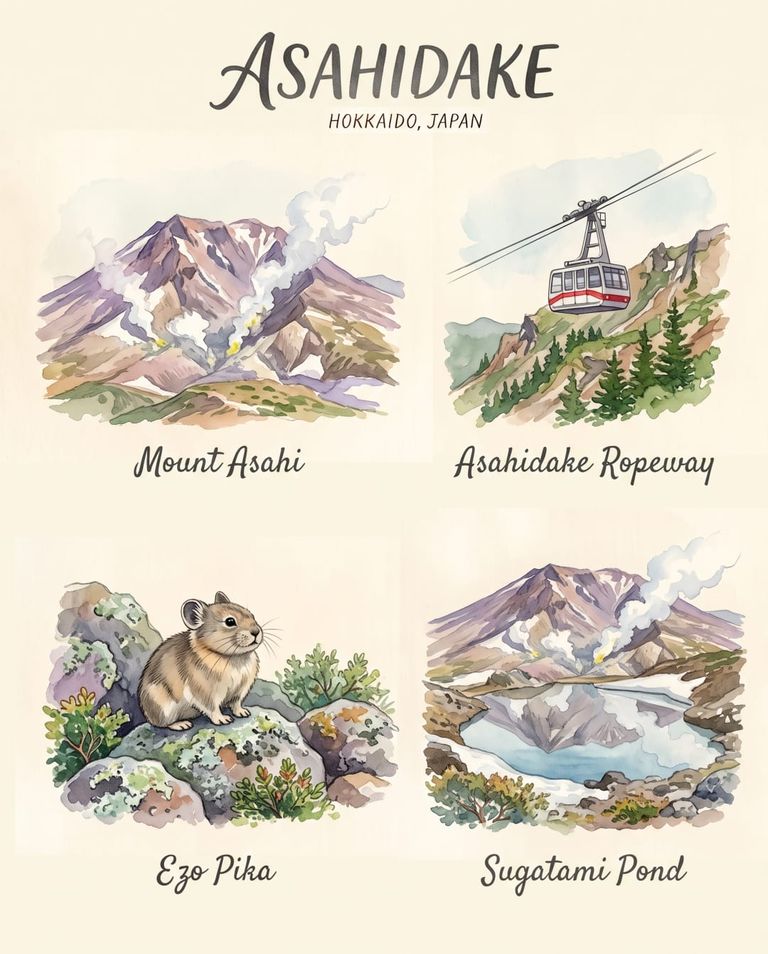
The route begins at Mount Asahi, also known as Asahidake, which stands as Hokkaido's highest peak. Located in the northern section of the central region, this volcanic mountain offers a rugged, alpine environment that feels distinctly wild compared to the cultivated valleys below.
Riding the Asahidake Ropeway
For hikers and sightseers alike, the Asahidake Ropeway serves as the primary gateway onto the mountain. The aerial ropeway lifts visitors up through alpine forests, cutting out a demanding lower climb and providing broad views over the surrounding valleys. As the lift gains elevation, the dense tree cover gradually gives way to subalpine brush, scree, and dramatic volcanic slopes.
Walking Around Sugatami Pond
At the upper ropeway station, a network of maintained walking paths leads travelers toward Sugatami Pond. This crystal-clear alpine pond sits directly below the main peak, mirroring the jagged ridgeline and the active volcanic fumaroles that hiss and release steam into the crisp mountain air. Circling the pond offers an accessible way to experience Hokkaido's high-altitude volcanic landscape without requiring an arduous mountaineering expedition.
Watching for the Ezo Pika
While exploring the rocky scree paths around Mount Asahi, keep an eye out for the Ezo pika. This small alpine mammal, native to the mountainous regions of Hokkaido, resembles a tiny rabbit with rounded ears. Ezo pikas spend their days darting between boulders, gathering vegetation, and making sharp, high-pitched calls across the rocks. Spotting one among the mountain flora is a quiet highlight of visiting the summit area.
The Farm Fields and Forest Cabins of Furano
Traveling south from Mount Asahi brings you into the wide basin of Furano. Known across Japan for its idyllic pastoral charm, Furano is characterized by gently sloping fields, rich agricultural traditions, and quiet forest retreats.
Walking the Lavender Fields
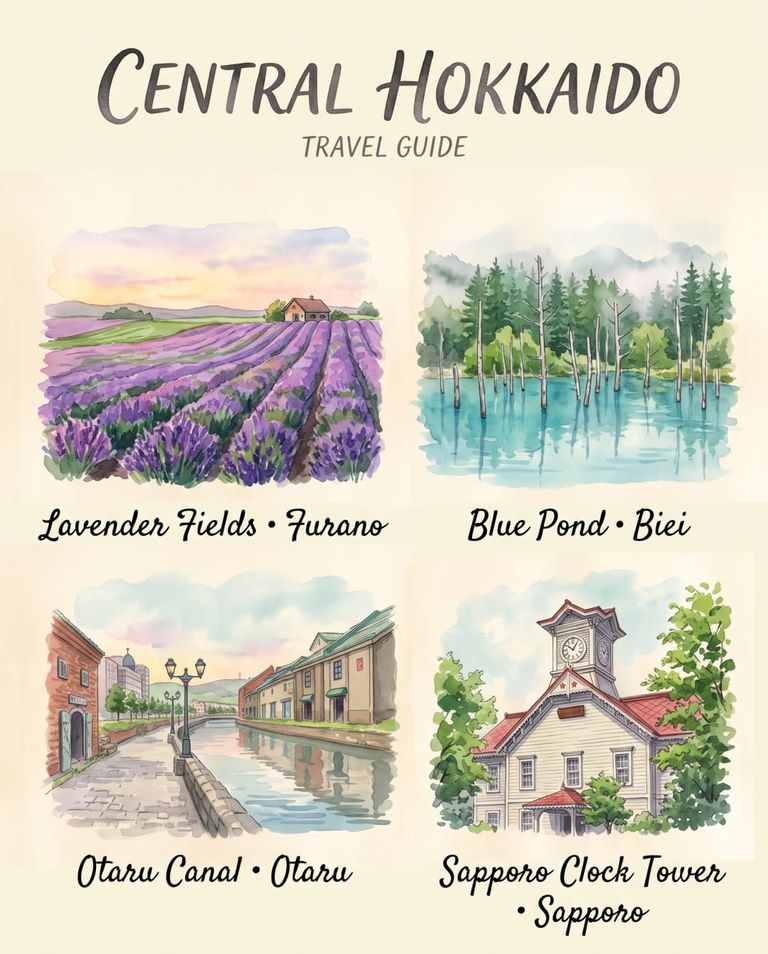
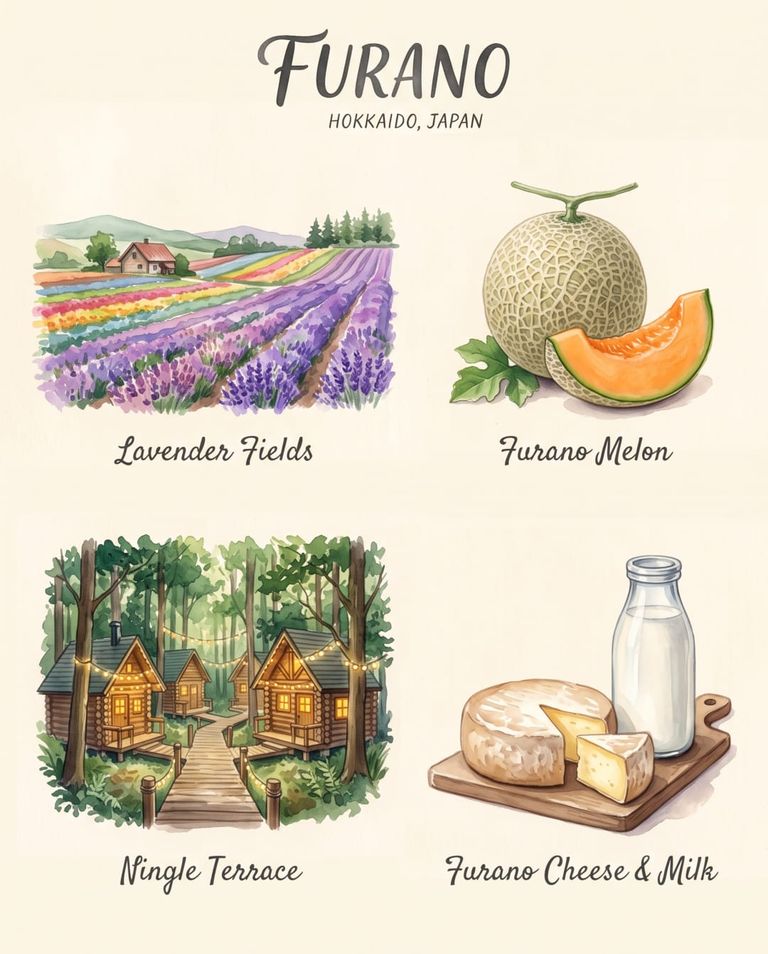
During the warmer months, Furano becomes famous for its expansive lavender fields. Cultivated in neat, parallel rows that sweep across the undulating hillsides, the vibrant purple blossoms create a striking contrast against the green valley floor and distant mountains. Walking alongside these fragrant fields provides a quintessential rural Hokkaido experience.
Sampling Sweet Furano Melon
Furano's inland climate, marked by warm daylight and cool mountain nights, produces some of Japan's sweetest fruit. The Furano melon, an orange-fleshed cantaloupe variety, is prized for its high sugar content and tender texture. Local farm stands throughout the area sell freshly cut melon slices, making it an easy, refreshing stop during a day of driving.
Exploring Ningle Terrace
Located in a quiet wooded enclave, Ningle Terrace is a collection of rustic log cabins built directly among the trees. The cabins are connected by wooden boardwalks and illuminated by warm string lighting strung through the branches. Inside each small shop, local artisans showcase handcrafted wooden goods, candles, and regional crafts, creating a cozy and peaceful atmosphere that feels removed from the road.
Savoring Local Furano Cheese and Milk
The dairy industry in Furano benefits from vast grazing land and clean water sources. Visitors can taste fresh regional milk, known for its rich and creamy profile, as well as a variety of locally crafted cheeses. Sampling these dairy products offers a direct taste of the valley's deep farming roots.
The Scenic Landscapes and Fresh Harvests of Biei
Just north of Furano lies the neighboring township of Biei. While sharing a similar agricultural foundation, Biei has a distinct visual character defined by dramatic, wave-like hills and unusually vivid natural formations.
Visiting the Blue Pond (Aoiike)
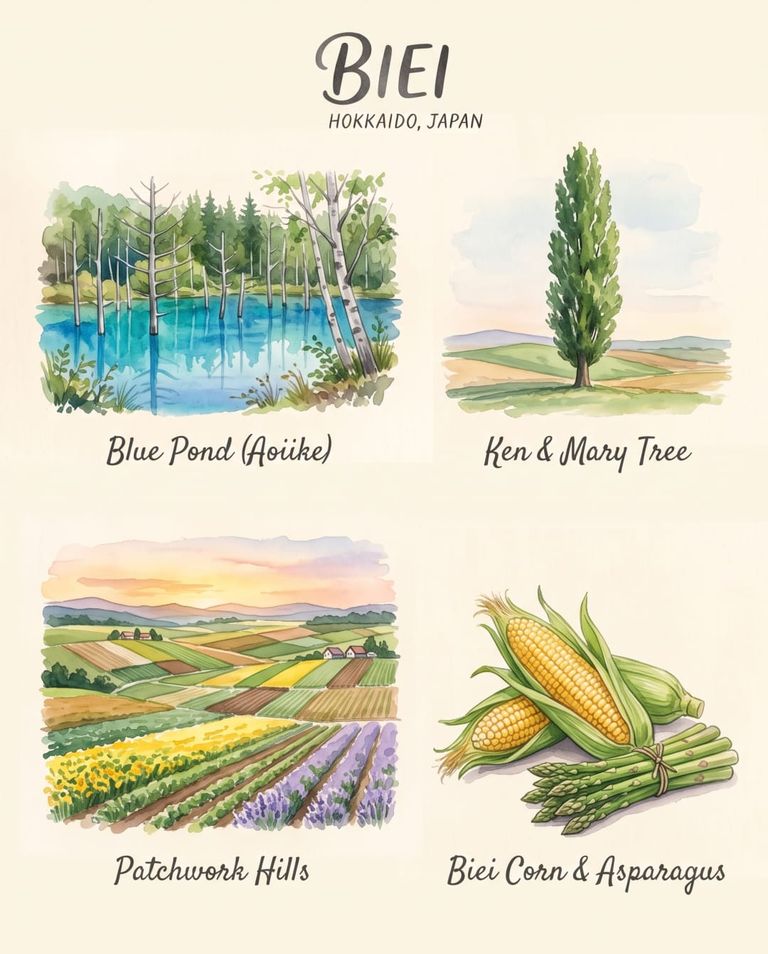
One of the most recognizable sights in central Hokkaido is the Blue Pond, known locally as Aoiike. Formed by mineral-rich river runoff, the pond displays a striking, bright turquoise hue that changes subtly depending on sunlight and weather conditions. Partially submerged white birch trunks stand frozen in the water, creating a quiet and slightly surreal natural scene framed by surrounding pine woods.
Driving the Patchwork Hills
Biei is often celebrated for its Patchwork Hills, an expansive area where rotating agricultural crops create a natural quilt pattern over the rolling terrain. Farmers plant different crops side by side, alternating between golden wheat, green vegetables, and flowering legumes. The result is a rolling carpet of contrasting colors and textures stretching to the horizon.
Spotting the Ken and Mary Tree
Along the scenic driving roads of Biei stands the Ken and Mary Tree, a solitary, statuesque poplar tree rising above the surrounding fields. The tree gained fame decades ago through a classic Japanese automotive advertisement and remains a beloved photography landmark, epitomizing the open skies and expansive scale of the countryside.
Tasting Local Corn and Asparagus
The volcanic soil of Biei produces exceptional seasonal vegetables. In particular, Biei corn and asparagus are legendary for their crispness and natural sweetness. Freshly harvested corn is often enjoyed straight off the cob or roasted, while local green asparagus appears in seasonal market stalls and local dishes throughout the area.
Canal Town Charm and Maritime Craft in Otaru
From the central agricultural valleys, the route heads west toward the coast, arriving at the historic port city of Otaru. Once a thriving center for herring fishing and maritime commerce, Otaru retains a distinctive, retro atmosphere defined by stone architecture, brick warehouses, and seafaring traditions.
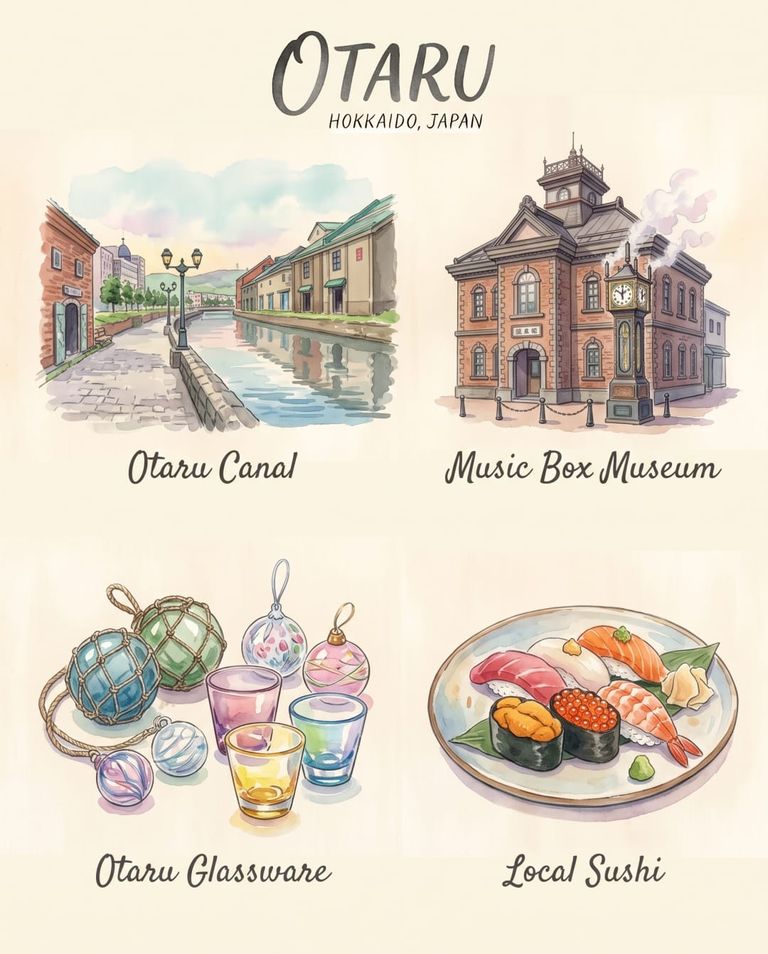
Strolling Beside Otaru Canal
The central attraction of the town is the historic Otaru Canal. Lined with preserved brick and stone warehouses that once stored cargo from merchant ships, the canal walkway is flanked by classic gas street lamps and manicured greenery. Walking the stone pathway along the calm canal water provides a direct connection to Hokkaido's early modern trading history.
The Historic Music Box Museum
At the end of Otaru's main merchant street sits the Music Box Museum, housed in a handsome red brick building. Outside the entrance stands a historic steam clock that puffs steam and chimes at regular intervals. Inside, thousands of intricate music boxes made from wood, glass, and metal are on display, reflecting the town's historical love for decorative crafts and music.
Handcrafted Otaru Glassware
Otaru is also celebrated for its traditional glassware industry, which originated from manufacturing glass fishing floats and kerosene lamps for the port. Today, local workshops produce refined drinkware, delicate ornaments, and colorful glasses. Exploring these glassware galleries offers an appreciation for the region's enduring artisanal skills.
Fresh Local Sushi
Given its coastal location along Ishikari Bay, Otaru is a premier destination for seafood lovers. The city's sushi restaurants serve incredibly fresh catches, including sweet raw shrimp, tuna, salmon, sea urchin, and salmon roe. Sitting down for a nigiri meal here is an essential culinary stop before moving inland to the capital.
Winding Down in Sapporo
The final destination of this central itinerary is Sapporo, Hokkaido's capital and largest urban center. Here, wide grid-patterned streets, historic civic architecture, and a celebrated dining scene provide a lively contrast to the quiet rural towns visited earlier on the trip.
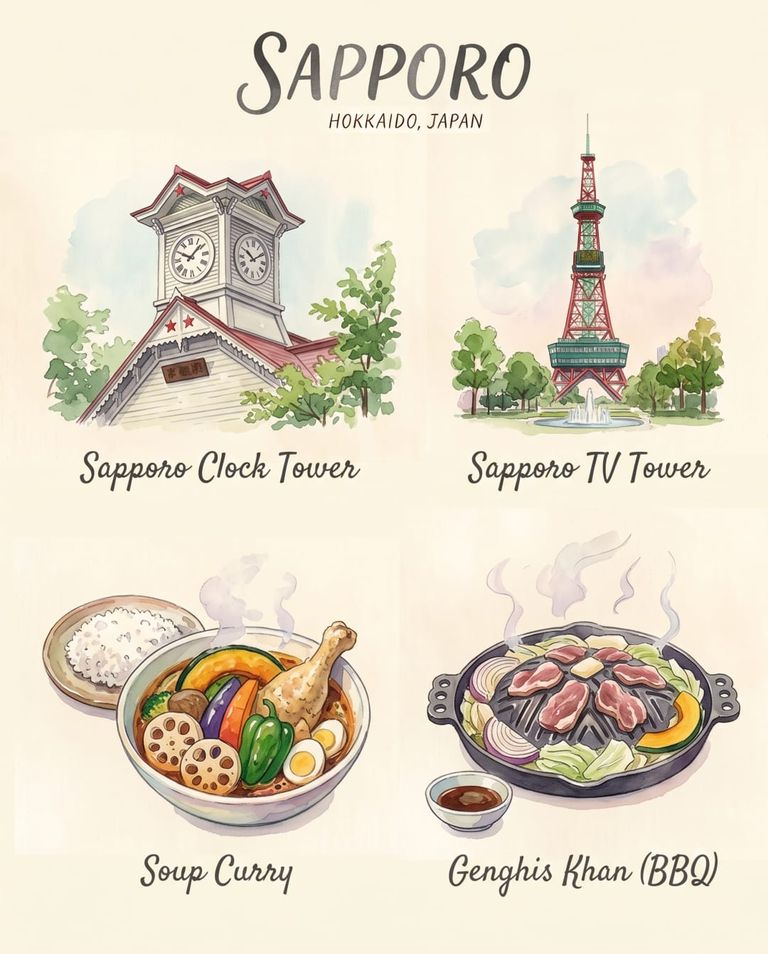
Visiting the Sapporo Clock Tower
In the heart of the downtown grid stands the Sapporo Clock Tower. Built as a drill hall for the Sapporo Agricultural College in the late nineteenth century, this white-and-red wooden building is one of the oldest surviving structures in the city. Its preserved pendulum clock continues to keep time, serving as a reminder of Hokkaido's pioneering era.
Looking Out from the Sapporo TV Tower
A short walk away lies the Sapporo TV Tower, standing prominently at the eastern end of Odori Park. Rising above the park's fountains and tree-lined walkways, the tower provides a vantage point over the city's green corridors and the surrounding mountain backdrop. It is an ideal spot to gain your bearings and watch the city transition from daylight into illuminated evening.
Dining on Comforting Local Dishes
Ending the journey in Sapporo calls for two of the city's most famous culinary traditions:
- Soup Curry: A beloved Sapporo specialty featuring a deeply spiced, aromatic broth served with tender chicken, boiled egg, and chunky regional vegetables such as lotus root, pumpkin, and sweet pepper. It is served with a bowl of steamed rice, meant for dipping into the fragrant soup.
- Genghis Khan (BBQ): A communal grilled meal centered on sliced mutton or lamb cooked on a convex, domed metal skillet. Sliced onions, cabbage, and squash are placed around the rim to catch the juices as the meat sizzles on the central dome, accompanied by a savory dipping sauce.
Connecting the Route
Car rental is the most practical way to navigate this central Hokkaido itinerary. Driving allows you the flexibility to stop at roadside viewpoints in Biei, sample farm produce in Furano at your own pace, and carry hiking gear for Mount Asahi. By beginning in the high mountain air of Asahidake and concluding among the vibrant night lights of Sapporo, you will experience the remarkable breadth of landscapes, foods, and traditions that make central Hokkaido such a rewarding region to explore.